
Nanda, -150 to -84, Northern India, Courtesy of AnyHumanEver: GRAPHIC OF THE DAY
Assignment: Draw a life from the <http://anyhumanever.com/> website. Investigate. Prepare five slides and a 1500-word essay explaining and justifying your beliefs about the accuracy of the random human life that the website generated for you. Be prepared to present and defend your beliefs on zoom to me and your peers for fifteen minutes:
I would love to see the guts of this!
What is the harness generating this: <https://anyhumanever.com/> ?
<https://www.reddit.com/r/anyhumanever/> <https://anyhumanever.com/sources>
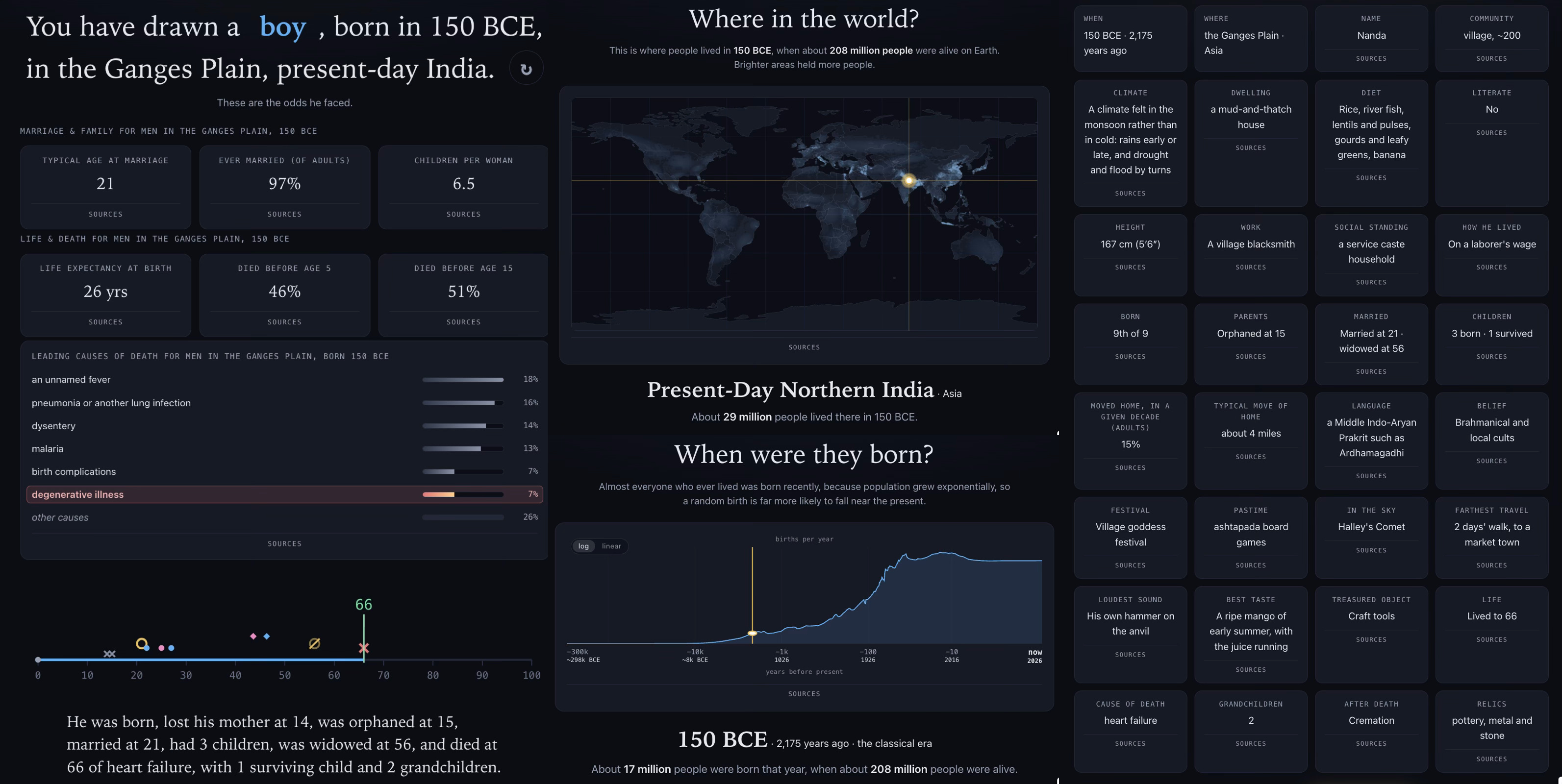
AnyHuman Ever: Nanda <https://anyhumanever.com/life/1677218184-1062720287-854628301-213887123-m27-x1KkZzS80FP8xoiuAu6gvie4CmQyJ>: ‘Nanda is not a real person. But his life story is created from the statistical reality of the Ganges Plain in 150 BCE.
Nanda was born in 150 BCE, on the Ganges Plain, near present-day Bindki. He lived in a village of about 200 people. His dwelling was a mud-and-thatch house, lit by a clay diya, an open lamp of sesame oil. He ate mainly rice; river fish; lentils and pulses; and gourds and leafy greens, with banana in season. Of the family’s nine children, Nanda was the youngest.
He followed the religion of the Brahman priests and local cults, and spoke a Prakrit, an everyday speech of northern India descended from Sanskrit such as Ardhamagadhi. In his world the gods of the Vedas were served by Brahman priests at fire altars, and the nearer powers, the spirits of trees, pools and snakes, received offerings at village shrines. The harvest in his village ended each year at the goddess’s tree, with the first sheaves and a goat offered and the meat shared out.
He lost his mother at 14. He was 15 when his father died.
He was 5 feet 6 inches tall. His work was that of a village blacksmith. At a small forge, its fire kept hot with air pumped from leather bags, he made and mended the village’s plowshares, sickles, axes and hoes. Farmers paid him a fixed measure of grain at each harvest, and the busiest weeks came before the sowing, when every plowshare needed sharpening.
He married when he was 21. Of the three children he had, a boy survived past childhood. The year he turned 40, his family moved to a village six miles away.
In idle hours he played board games with the other men of his village, on boards of eight rows scratched in the dust under a tree, moving pebbles by throws of dice. The best players needed no board at all and played with the squares held in their heads.
The greatest distance he ever traveled was 2 days’ walk, to a market town. Most days brought nothing louder than his own hammer on the anvil. The best thing he ever tasted was a ripe mango of early summer, with the juice running, eaten in the orchard in the shade at midday. His most prized possession was the iron tools of his craft, worth more than the rest of the house together.
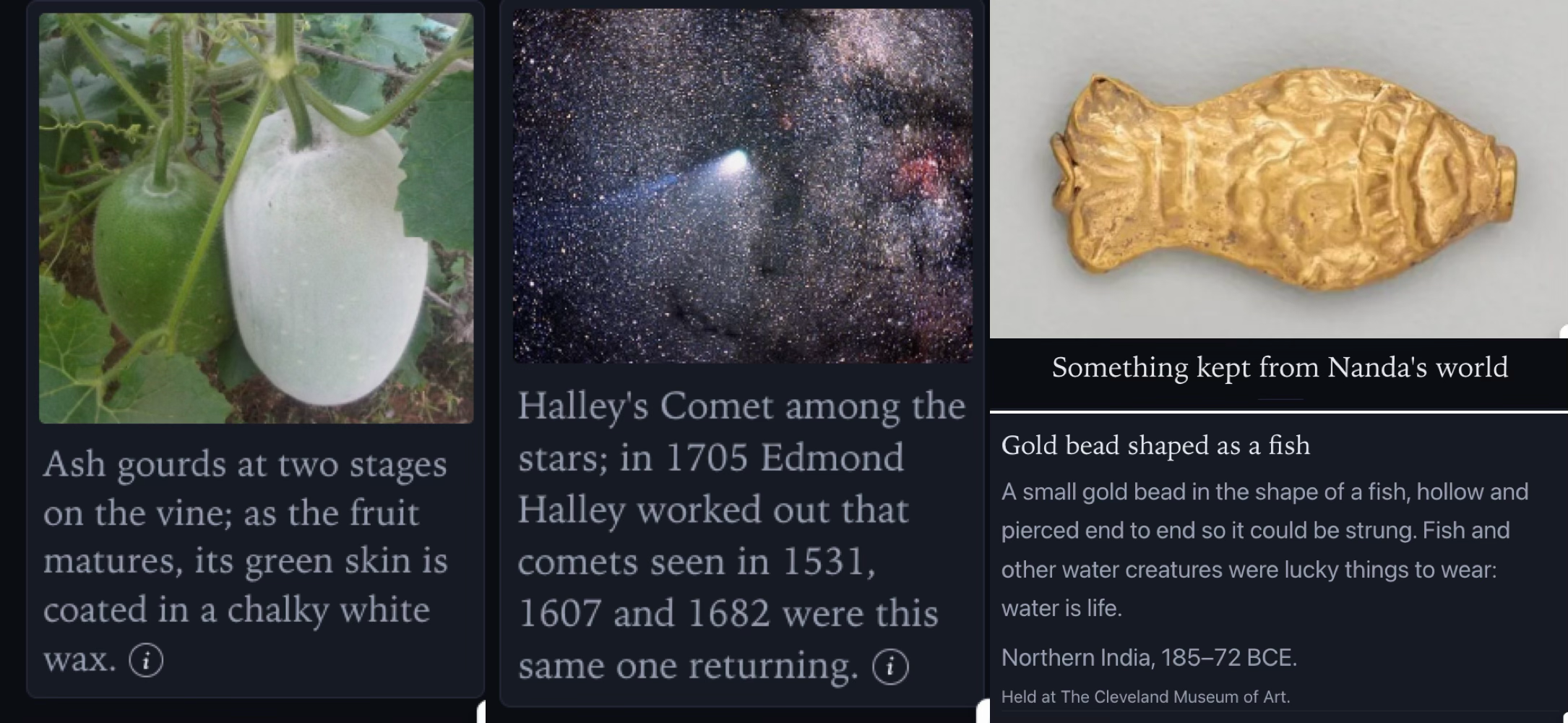
When he was 49, Nanda’s family moved to a village fourteen miles away. His wife died when he was 56. Nanda saw Halley’s Comet at 63: its only visit in his lifetime.
Death came at 66, of heart failure. He left behind two grandchildren. His body was afterward cremated on a pyre and the ashes given to a river, as the rite of the Vedas, the ancient Sanskrit hymns, laid down.
Brad DeLong here: Mud-and-thatch house, nine siblings, both parents dead by fifteen: how much of this is (statistically) right? The best thing he ever tasted was a ripe mango in the midday shade, and his iron tools were worth more than the rest of his house put together. That’s a lovely piece of history. And I now have a learning goal to impose on my students for next semester: learn enough about how to research these issues to figure out if what it tells you is roughly (statistically) right.