
CROSSPOST: SEVA GUNITSKY: Trump’s “Near Abroad”
Muscovy ‘Rus’s coercion and attempted coercion of its “Near Abroad” is legible: it targets neighbors already trying to escape from its control, like Georgia, Ukraine and Moldova. Trump is, however, a chaos monkey. Trump is thus creating resentful neighbors. And that resentment will cause material harm to U.S. citizens and will hobble the U.S. considered as a global strategic actor:
Countries had not previously imagined that the United States might attempt to exert destructive coercion, in large part because the destruction harms the interests of the U.S. as a strategic polity and the material interests of U.S. citizens.
Now they know that it might.
And they know it is not just Trump, for no Republican powerbroker has dared say “boo” in opposition. And they know that the U.S. will periodically elect Republicans.
Why i Trump doing this?
In Sasha Gunitsky’s view, simply because he likes to punish. The only question is: Has this country’s leader demonstrated sufficient fealty to Donald Trump? If the answer is “no”, then Trump will undertake actions—typically self-destructive actions—to inflict punishment.
Henry Farrell’s crosspost introduction notes that this argument can be extended far beyond Canada. It applies to Western Europe, which isn’t physically next door, but which since the Marshall Plan has also sat inside America’s “Near Abroad”.
Henry Farrell crossposts this. And he is right to do so. It is good!
Henry says:
This piece by Seva is succinct and to the point, but is maybe the best account of how Trump's policies affect its relations with allies that I've seen. Western Europe is not physically next door to the United States, but is absolutely located in the "Near Abroad" of the imagination…
Seva Gunitsky:

Trump’s Near Abroad
<https://hegemon.substack.com/p/trumps-near-abroad> <https://hegemon.substack.com>

A complaint from across Lake America
Seva Gunitsky
2026-10-14
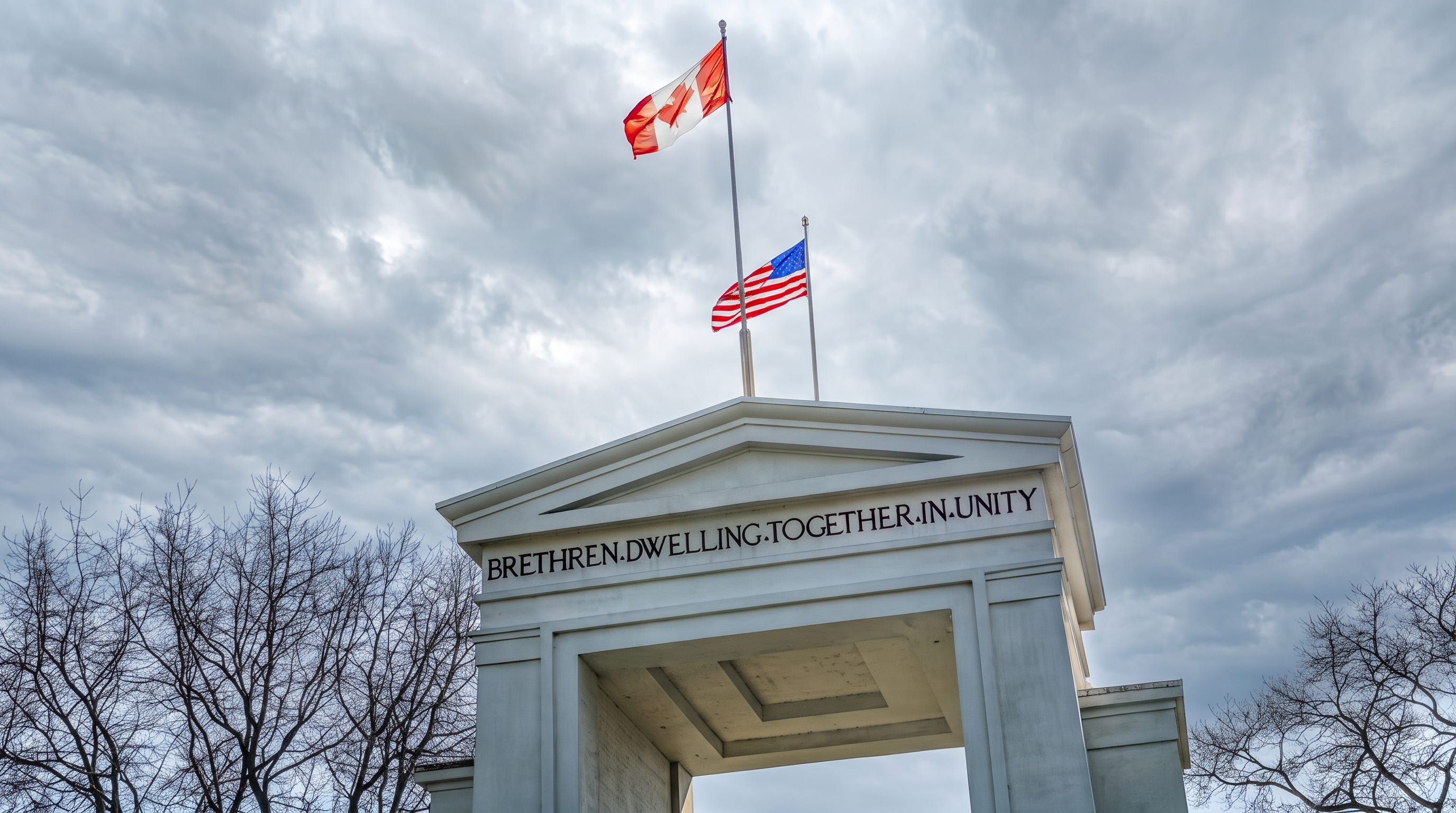
Russia has a name for neighbors that aren’t supposed to have their own foreign policy: the Near Abroad. It’s a wonderfully dialectical term, each half negating the other to create an imperial synthesis that treats sovereignty as a plaything of the Russian imagination. “Which countries border the USSR?” asks the school quiz in the Soviet joke. Correct answer: “Whichever ones it wants.”
I have a new piece in Survival comparing Trump’s treatment of Canada with Putin’s treatment of his own neighborhood. With Canada, as with Venezuela and Greenland, Trump has now acquired his own Near Abroad. Real places, to be sure, but not real in the same way America is real, and thus subject to poking and prodding and the occasional presidential kidnapping by the hegemon.
Ever since the big happy family fell apart in 1991, Moscow has deployed a reliable set of tools to keep its runaway children in line. This means cutting off their trade, questioning whether they are real countries, and cultivating separatists inside their borders. Trump is now using the same toolkit against Canada: economic coercion, annexationist rhetoric, and support for internal separatist movements.
I won’t go into them here (the article does), but each of these three elements have been a key part of Trump’s Canada policies.
The result has been a cultural and political rejection of America as a concept, let alone a neighbor. (Yes, America stands for bad things now. I’ve seen it firsthand.) The tragic irony is that until recently Canada barely considered itself “abroad”, near or otherwise. Until 2009 Americans could drive there without a passport, as I did with my high school friends to get into bars before we were 21. Those days are long gone.
Why the parallels? I think it’s because both Russia under Putin and the US under Trump share a vision of international order built on spheres of influence, in which great powers have the ultimate say in their neighborhood. Smaller states comply or face punishment. The same logic that places Canada in Trump’s sphere also places Ukraine in Putin’s, which helps explain Trump’s deference to Moscow over the war.
Post-Soviet states responded to Russian pressure by diversifying their relationships and Canada is now doing exactly the same: joining European Union defense-procurement efforts, ordering submarines from Germany, and signing trade agreements across Asia and Europe.
Russia screwed up badly by trying to be a 19th century regional hegemon after recovering from the Soviet collapse. But it’s the only thing it knows how to do. Coercion was supposed to keep its neighbors inside its sphere of influence, but instead accelerated their departure. The US is now repeating Russia’s mistakes with a neighbor that was until recently the closest ally in America’s own fading order. That to me is the craziest part. Russia coerces neighbors that are trying to leave its orbit: Georgia after the Rose Revolution, Ukraine after the Orange one, Moldova whenever it looked toward the EU. But Canada was not trying to go anywhere.
Russia’s motives are at least legible. It wants to rebuild an imperial sphere and stop resentful neighbors from leaving. Trump is instead creating resentful neighbors who had not considered leaving until recently. He works from an older idea of order that rejects Westphalian sovereignty in favor of personal fealty. Under that logic Canada’s offense was probably insufficient gratitude. Welcome to the neo-feudal world.
<https://hegemon.substack.com/p/trumps-near-abroad> <https://hegemon.substack.com>
Brad DeLong here: Much of the long run damage, I think, comes from the observation by everyone in the world that there has been absolutely zero pushback from anyone in the Republican Party, no matter how stupid and destructive the actions of chaos-monkey Donald Trump and his assembled coalition of grifters have been.
That tells them that even if the word of Democrats is good, the word of Republicans is not. And they also know that the United States will periodically elect Republicans. so the United States has become not a stronger sibling to be embraced, but rather a Gulliver to be tied down by every means possible. Thus the decoupling will accelerate. And it will be costly, and very very costly for the people of the United States.
Starting in 1917, really, the North Atlantic Democratic Alliance was definitely a thing, with first Britain as the fading and then the United States as the rising and then the hyperpowerful hegemon. Oh, there was some backsliding and attempted backsliding: Henry Cabot Lodge, William Borah in some of his moods Herbert Hoover, Robert A. Taft, Henry Kissinger’s rather Metternichian excessive desire to play footsie with dictators like Brezhnev, Mao, Pahlavi than strengthen alliances and coöperation with the democratic polities he found unruly. But after 1917 the axis of global political economy and strategic polity was that everyone was much better off when the countries that were to become Valery Giscard d’Estaing, Helmut Schmidt, and Gerald Ford’s G-7 hung together (even though Germany and Italy required some—persuasion before they would see it that way).
Trump has reversed that. And no Republican power broker has dared to say boo. The result is the same as Muscovy ‘Rus’s attempt to coerce its “Near Abroad”: the coercion is sometimes effective, at the price of making everyone linked or near to Muscovy ‘Rus attempting to decouple, get away, and ally with others. Since 1991, Moscow has used three tools on its former Soviet neighbors: cutting off trade, questioning whether they’re real countries, cultivating separatists, and invasion.
Gunitsky argues Trump is using all of the first three on Canada right now.
Russia’s bullying of Georgia and Ukraine was cruel but legible: it was trying to stop defectors. Trump’s bullying of Canada has no such logic, unless the offense is “insufficient gratitude.”
Both Putin and Trump see the proper world order as one of spheres of influence, where great powers would run their neighborhoods and do what they wish while smaller states in those spheres of influence suffer what they must. In Gunitsky’s view, this explains a lot of Trump’s deference to Putin. And that deference plus Trump’s attempted coercion of Canada means that the rest of what used to be the North Atlantic Alliance is rejecting America “as a concept,” not just as a good neighbor.
How far can the decoupling go? Gravity-model trade economics suggests that Japan, Korea, and Taiwan along with Europe can do so substantially. Canada, especially Ontario, can only hedge at the margin. It cannot effectively exit from integration with tehe United States. Submarines and new trade agreements are small next to how deeply integrated it is with the US market.