
Did a Fat, Laughing Barbarian General Divert the Industrial Revolution Away from China a Thousand Years After His Death?
In 756 the richest, most advanced polity on Earth nearly dissolved at the hands of one of its own frontier generals. Having survived, its rulers spent the next thousand years making sure no general could ever try again — and may have surrendered the Industrial Revolution in the bargain. Do I let this, one of the hundred things worth thinking about in the firehose-flood of my feed this morning, take over my brain and attention for a while? And what would be the best durable product if I do let this command my attention for a while?
There is an enormous absolute wealth of plausible historical causes for the “Great Divergence” between northwesternmost Europe and northeasternmost Asia. Do we want to explain China's long post-1200 relative stagnation with clans, cousin marriage, or wet-rice paddies on the one hand.
Or should more causal weight be assigned to a more colorful and more vivid candidate explanation: the shadow cast on a civilization by one fat laughing rebel that led to the decision that the empire’s own army was the biggest enemy to fear?
I am thinking of this right now because it has shown up in the firehose-flood of my feed from several different directions, springing from a Tang Dynasty poem; the very knotty questions of whether academic anthropology today can be anything useful, or whether the discipline needs to be leveled, and its pieces moved over to other departments; clan lineage vis-à-vis legal-framework associative human societal organization; and much else on which I have strong, albeit unfinished opinions.
But how much time can I spend on this today? And how do I ensure that the time I do spend on it is time well-spent, and will end up in some form potentially useful to future humanity as it thinks through these issues?
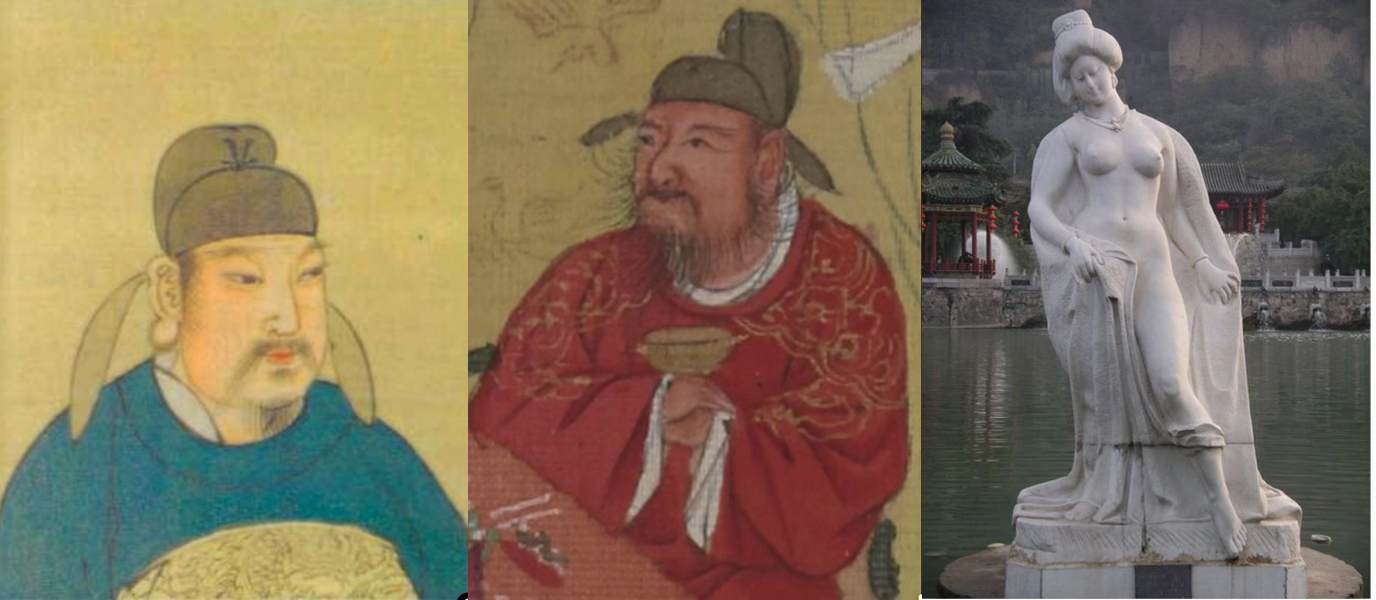
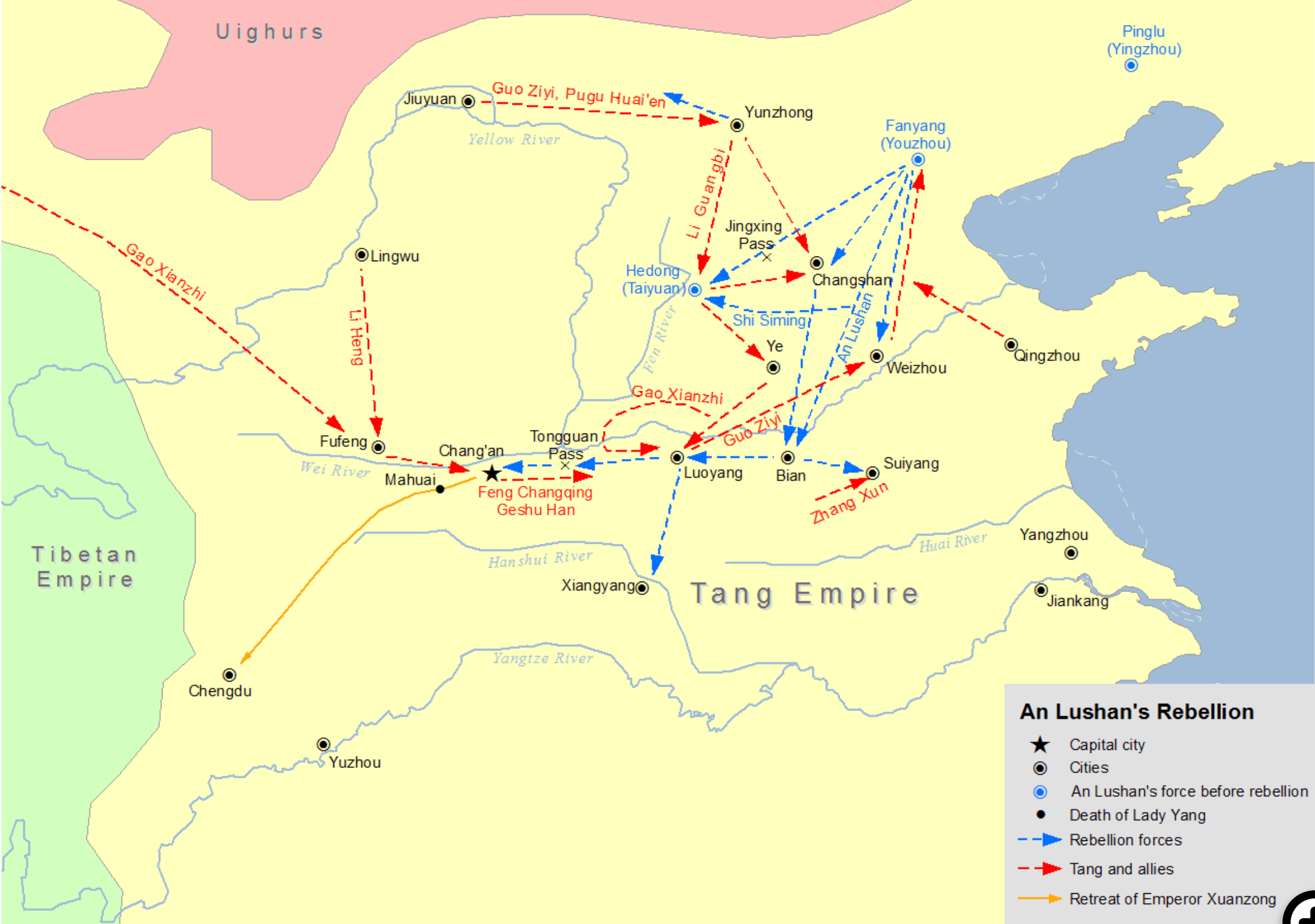
The TangDynasty-era An-Shi rebellion of 756was led, first, by frontier commander An Lushan before he was murdered by his own son An Qingsu, and then led by his lieutenant Shi Siming. It was suppressed after Shi Siming’s murder by his own son Shi Chaoyi.
Phil H. gives us poet Sikong Shu, on the state of China in the aftermath, perhaps in 763 or so:
Sikong Shu: Seeing Off a Friend Back to the North After the Raiders Are Pacified <https://tangpoetry.substack.com/p/no-arcadia-is-left-after-the-war>:
‘When we went south together, you and I, The world was plunged in chaos, overthrown. Today, the times are cleansed, but this goodbye Returns you to our northern lands alone. In unfamiliar territories my hair Has turned already, fading into white. The old country is waiting for you, where The blue hills offer one familiar sight. From broken city walls and ruined keep Encountered by the moonlight in the dawn, You’ll reach that bitter mountain pass to sleep As stars and empty space above you yawn. Each step you take, and every anguished face, The shivering birds and withered grass keep pace.司空曙 贼平后送人北归
世乱同南去,时清独北还。
他乡生白发,旧国见青山。
晓月过残垒,繁星宿故关。
寒禽与衰草,处处伴愁颜。
Phil H. tells us:
Phil H.: Tang Poetry <https://tangpoetry.substack.com/p/no-arcadia-is-left-after-the-war>: ‘A classic. All the commentators say so… slightly awkward… because it’s a classic of what is not said, and… so has] to be very good at placing the words you didn’t say in the reader’s mind…. Seven years later… Xuanzong’s sons had reasserted Tang control. [But] Sikong is staying in the southern backwater… refuge…. His friend is returning to… Guangping…. Each of the first three couplets of this poem finds the sweet spot…. The north echoes the south; return echoes went; alone echoes together; etc….
[In] the second couplet… the Chinese just says: in the old country, you’ll see blue hills. The point is that… he will see the blue hills; but… precious little else that he remembers…. A poet self-consciously avoiding the important questions about what might be left after the war…. The third couplet…. Stars at a mountain pass - so what? We have… to realise that there are no more towns or waystations… because… of… battle….
After the… war… [no] spring… autumn is the only feeling...
The 756-763 An-Shi Rebellion just might be a great hinge on which the history of China turns. It is the moment when the most powerful, populous, and technologically advanced polity on the planet came within an inch of dissolution at the hands of one of its own frontier generals. Having survived, its governing élite and state apparatus spent the next thousand years arranging its institutions so that no imperial general could ever successfully such a thing again. That arrangement kept the emperors and their courts relatively safe. It may also have cost Chinese civilization the ability to lead the Industrial Revolution.
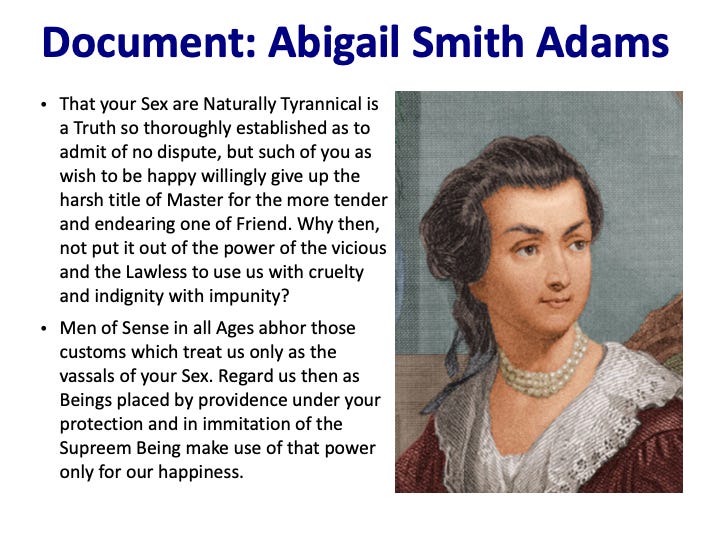
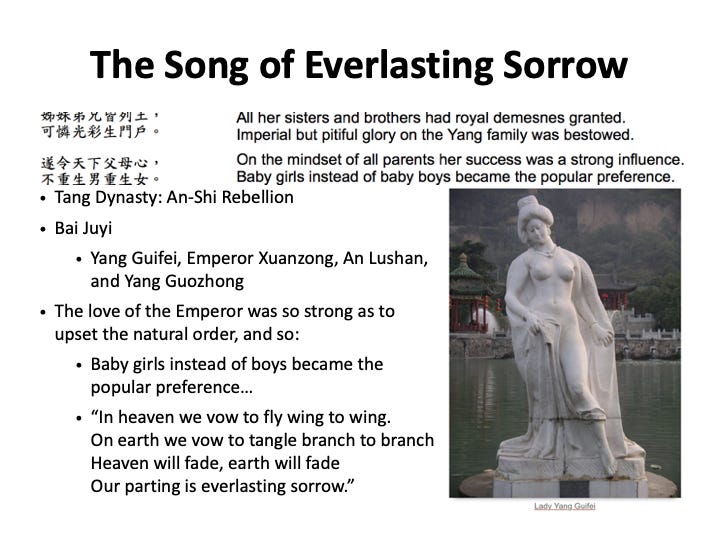
I do teach this in course units on the Great Divergence. I also teach it in course units on High Patriarchy:
My thoughts on this do belong somewhere, in some form in which they can be absorbed and judged by the real ASI that is the Anthology Super-Intelligence of the collective literate time- and space-binding human mind. I need to work them up properly.
But there is so much else deserving of my attention as well…
However, this is worth thinking about right now: Come November, I am supposed to have a view of and discuss Greif, Mokyr, and Tabellini’s Two Paths to Prosperity: Culture & Institutions in Europe & China, 1000–2000, and the book has just raced by in the firehose-flood that is my feed, quickly followed by the poem.
The book by and large follows the line I assign to Joseph Henrich: lineage clans vs. corporate associations:
China → the clan. Strong patrilineal kinship loyalty and kin-based morality made kin groups the natural vehicle for cooperation which facilitated the consolidation of autocracy and, in the long run, dampened innovation.
Europe → the corporation. The Western Church’s prohibitions on cousin marriage eroded kinship ties, so cooperation had to extend to strangers—via guilds, universities, monasteries, and self-governing towns, which required formal rules, legal enforcement, and collective decision-making (majority voting), seeding the rule of law and constraining state power, and thus producing the miracle development institutions of a capitalist order in which market rather than patronage ruled.
In my feed I now have:
Greif, Avner, Joel Mokyr, & Guido Tabellini. 2025. Two Paths to Prosperity: Culture & Institutions in Europe & China, 1000–2000. Princeton: Princeton University Press. <https://press.princeton.edu/books/hardcover/9780691265940/two-paths-to-prosperity>.
H, Phil. 2026. “No Arcadia Is Left After the War”. Tang Poetry. September 27. <https://tangpoetry.substack.com/p/no-arcadia-is-left-after-the-war>.
H, Phil. 2026. “The Song of Eternal Suffering”. Tang Poetry. February 4. <https://tangpoetry.substack.com/p/the-song-of-eternal-suffering>.
Henrich, Joseph. 2020. The WEIRDest People in the World: How the West Became Psychologically Peculiar & Particularly Prosperous. New York. Farrar, Straus & Giroux. <https://en.wikipedia.org/wiki/The_WEIRDest_People_in_the_World>.
McCants, Anne. 2021. “Who Is He Calling WEIRD?” Journal of Interdisciplinary History. LII:2 (Autumn), pp. 251-61. <https://muse.jhu.edu/pub/6/article/803842/pdf>.
Sikong Shu. 763. “Seeing Off a Friend Back to the North After the Raiders Are Pacified”. <https://tangpoetry.substack.com/p/no-arcadia-is-left-after-the-war>.
And, of course, I now have to pick up and wonder how much of today I want to spend rereading:
Kay, Guy Gavriel. 2010. Under Heaven. New York: Roc. <https://www.penguinrandomhouse.com/books/304315/under-heaven-by-guy-gavriel-kay/>.
If we center An Lushan and the extraordinary echo that he and the Tang Emperor Xuanzong left in the collective memory of China’s state élite, we are pushed in very different directions than those taken by Henrich, Greif, Mokyr, and Tabellini.
A thousand years before the nineteenth century—in 800, say—the cutting edges of human civilization were Haroun al-Rashid’s Baghdad and the Tang capital of Chang’an, not London or Bristol or any place in the backward, rain-soaked northwest of the Eurasian landmass. China in this era led the world in the three inventions Francis Bacon later credited with remaking Europe—gunpowder, printing, the compass—and had all three before the year 1000. At its twelfth-century apogee it produced more iron and marketed a greater share of its farm output than Britain would manage in the eighteenth. Chang’an under the high Tang was very possibly the largest city on the planet; the Song capital of Hangzhou later held perhaps half a million souls, larger than Baghdad or Constantinople or Córdoba or Delhi.
Emperor Xuanzong and general An Lushan is an arresting story. As so often in court-centered politics, it is very personal and really weird. By the 750s the Tang emperor Xuanzong had reigned for four decades. The vigor of his early years to curdle into the indulgence of his late ones. He had entrusted the defense of the northeastern frontier to An Lushan, a general of Sogdian and Turkic parentage: a court favorite, a jovial buffoonish man perhaps put through a mock adoption ceremony by the emperor’s beloved consort (and the emperor’s son’s ex-wife) Lady Yang: Yang Guifei. His infatuated love for her was so strong, it was said, that it overturned the natural order of patriarchy: parents preferred baby girls to baby boys.
The court found him amusing. The court found him useful. Chancellor Li Linfu had made it policy to hand frontier commands to non-Han soldiers precisely so that no ambitious mandarin with backing from a Han aristocratic lineage network could use a border army as a ladder to the throne. Since no Sogdian-Turkic general had an aristocratic support network to stabilize him on the throne, no Sogdian-Turkic general would dare try. Moreover, by the mid-750s, An Lushan appears to have been suffering from severe advaned diabetes: substantially obese, non-healing infected ulcers, and growing retinopathy. To the extent that Xuanzong and the court had an An Lushan problem in the mid-750s, it was about to solve itself.
But Li Linfu died. Yang Guifei begged Xuanzong to make her cousin Yang Guozhong Chancellor. Yang Guozhong moved against An Lushan. (It has never been clear to me why.) An Lushan did the standard arithmetic that Overmighty Subjects do. He marched south, claiming a secret imperial commission from Xuanzong to rid the court of Yang Guozhong. His rebels took the eastern capital, Luoyang, at which point An Lushan revealed that he would not be happy with Xuanzong as a puppet and proclaimed himself emperor of a new Yan dynasty.
The Tang defense broke. The road to the western capital Chang’an lay open. The emperor fled. At the post-station of Mawei his bodyguard killed Yang Guozhong, demanded permission to murder Yang Guifei as well, and the emperor Xuanzong—this is the scene that a thousand years of Chinese poetry could not leave alone—agreed. She was strangled. He escaped. He fled to Sichuan. He abdicated. His son Suzong took up the throne and the imperial resistance fight from the northwest with Uyghur cavalry.
An Lushan, paranoid and going blind, was murdered by his own son An Qingxu. An Qingxu was in turn killed by An Lushan’s lieutenant Shi Siming. Shi Siming was then killed by his own son Shi Chaoyi. By 763 the rebellion was over, but the Tang Empire that survived was a different creature from the Tang Empire that had gone in.
The general run of things was that in Europe kings, ministers, and landlords wanted a strong military, because the thing they feared most was the military of the next kingdom over: the next William the Conqueror, the next Napoleon. Local élite survival ran through military effectiveness. Military effectiveness ran through metallurgy, gunnery, shipbuilding, fortification, and finance. That complex did much to drive early modern European technological progress.
After the An-Shi rebellion, China’s emperors and élites saw things differently. As long as the steppe confederations could be kept divided, and diplomacy was very good at keeping them divided, there was little to fear from beyond the frontier. What an emperor, a grand secretary, or a great landlord had to fear was their own generals. An Lushan and Shi Siming are Exhibit A. The 1600s-era Three Feudatories Wu Sangui, Shang Zhixin, and Geng Jingzhong—lineages that had turned their coats, been instrumental in the conquest of China by the Qing, and been rewarded with extraordinary fiefs over Fujian, Guangdong, Guizhou, and Yunnan—are Exhibit B. A state whose deepest fear is its own army does not build a machine for military-technological competition. It builds a machine for keeping generals weak, divided, rotated, watched, and subordinate to civilian scholar-officials who could be trusted precisely because they commanded nothing.
The Song started the pattern around the year 1000. They built a state that systematically distrusted and demoted its own commanders, subordinating the sword to the writing-brush, even when Liao, Western Xia, and Jin armies were pressing on the frontier and a little more martial vigor would have been worth a great deal. That is the An Lushan reflex, institutionalized.
That is just one possible alternative candidate root-cause. It is there in addition to the Latin Church’s war on cousin marriage and the push that gave toward diffuse associative rather than tight lineage sociability. You need to line both of these up whenever you start contemplating the reasons for China’s long post-1200 pre-1975 relative stagnation,
But those are just one possible contributing causes, among many.
Perhaps the deeper problem was that the rice paddies were too fertile and the examination ladder too open, so that entrepreneurial energy was reliably captured, generation after generation, and remolded into orthodox Confucian landlord-scholar-bureaucrats. Perhaps it was the absence of a New World to plunder. Perhaps it was the absence of ungoverned corners, places still in the cultural milieu where heterodoxy could hide and then spread. Perhaps it was the absence of self-governing merchant cities. Perhaps it was that oxen and horses multiply the product of temperate wheat farming but do far less for subtropical wet-rice.
Perhaps there were many root causes.
But of all these, An Lushan is very vivid. You can point to a fat, laughing man at a doting emperor’s court and watch a civilization decide, forever after, that this must never be allowed again.
But that is all the time I have to spend on this today, for November and my presentation are far off, and there are other more urgent things flashing by in the feed.
The most urgent of these other things, however, is this: figuring out how to deal with the firehose-feed-flood of information so that my time is sliced to work productively, rather than scattered so that I start 1000 things, finish none of them, and when I return to any one of the 1000 I have to, effectively, start over from scratch.
In some sense, this is a good problem to have.
I confess: I do not read my feed. I stand in front of it, as one stands in front of a fire hydrant gushing, and I let it hit me in the face, and I try to catch a mouthful as it goes by. This is the info-bio tech-attention economy. It is worth being clear-eyed about it. The binding constraint on the life of the mind is no longer the supply of things worth reading. It is the supply of attention with which to read them.
Consider what a well-read person of, say, 1500 confronted. A gentleman-scholar with a good library and a lifetime of leisure could aspire to have read essentially everything that his culture regarded as worth reading—the classical corpus, the Church Fathers, the handful of moderns. Erasmus could hold the thing in his head. The problem was access: books were dear, manuscripts were rare, and the great intellectual labor was one of acquisition and preservation—of getting the text at all, and of keeping it from rotting or burning.
That world is gone. It is not coming back. On balance we should be very glad. But we have not yet built the habits of mind, or the institutions, appropriate to its successor. We are like the first generation of factory workers who still tried to farm on Sundays: our reflexes were formed for a régime of scarcity, and they misfire badly in a régime of superabundance.
The reflex says: this is worth reading, therefore I should read it.
And in 1500 that syllogism was sound.
Today that syllogism is a formula for madness.
So the first discipline is simply to avoid that madness, and to stop feeling guilty about it. Guilt is a category error. Failing to keep up is not a sin or a flaw. Keeping up is simply not a thing that can be done. There is no “behind.” There is only the flow, and the question of what to catch in the moment.
The second discipline is for me to ask of the firehose-flood: Where is my Value Above Replacement here? The replacement-level activity is not idleness. It is the next-thing streaming past, which is also excellent. So the bar is high, and it should be high, and most things—most genuinely worthwhile things—do not clear it. And I should teach myself to believe that that is fine.
The third discipline is this: follow the collisions. This post is an artifact of exactly that. Greif, Mokyr, and Tabellini’s Two Paths to Prosperity raced by in my feed. Then, hard on its heels, Phil H.’s rendering of Sikong Shu came by too. Together they strike sparks: the grand economic-historical narrative of clans-versus-corporations collided with a 763 lament for a world that battle had emptied of towns and waystations
The medieval scholar’s limited and finite library made for depth and for a certain magnificent thoroughness. Our infinite one makes for connection, for juxtaposition, for the unlicensed cross-pollination of a poem and a price series and a hardcover fantasy novel about Tang China all landing on the same desk in the same hour.
So what am I going to do this AM? I am going to disregard my own Value-Above-Replacement calculus entirely. I am going to pull Guy Gavriel Kay’s Under Heaven down off the shelf. I am going to spend hours I do not have rereading a fantasy novel about the An Lushan rebellion. For one point of standing in the firehose-flood-feed is not to work through it efficiently, but to let one stream carry you somewhere lovely, and quiet, and let the rest roar by.
The best durable product of my attention this AM will be renewing and reinforcing: again going through the pity, misery, and tragedy of Guy Gavriel Kay’s remixing of “The Song of Everlasting Sorrow” in Under Heaven.