CROSSPOST: GÉRARD ROLAND: The Berkeley years. Part XXII
Gérard Roland’s memoir of endowments, faculty retention wars, and the day the phone rang at 4 a.m.—plus my theory of why UC Berkeley administration tries to eat its healthiest limbs, and yet somehow it continues to do very well indeed:
It must have been back in 1999 or so, when we in the Berkeley economics department were looking to fill a field-hole in Comparative Economic Systems/Economics of Transition, when I asked my friend Andrei Shleifer whom we should try to hire. Andrei’s answer, as I remember it: “Gerard Roland. You at Berkeley, especially, should try to hire Gerard Roland. For industriousness, wisdom, knowledge, and collegiality, he is first-class. Gerard Roland. Definitely Gerard Roland.”
Now Gerard has a SubStack. And he is telling his stories. Today: The Berkeley Years. Part XXII: Being Department Chair (2008–2011):

CROSSPOST: GERARD ROLAND: The Berkeley years. Part XXII
<https://gerardroland.substack.com/p/the-berkeley-years-part-xxii> <https://gerardroland.substack.com/>

Being department chair (2008-2011)
Gerard Roland
Aug 28, 2026
I was asked by my colleagues to be department chair starting from July 1 2008 for the usual period of three years. I had been graduate chair for a few years before that and my colleagues had appreciated my work and initiatives, especially when it came to recruiting graduate students in competition with other great departments (Harvard, MIT, Stanford, Princeton, Chicago and others). People often have no idea how much time and effort people in top departments spend to recruit the best graduate students as well as the best junior and senior professors. We spend much more time than other departments on this, because success in these areas is fundamental to stay at the top.
My predecessor as Chair was Ben Hermalin, the well-known micro-economist. He had had a hard time, because there was the perception in the profession that UC Berkeley was financially less well off than other top universities since the many budget cuts to the University of California system, starting from the 1990s.[1] There was thus the rumor that the Berkeley economics department was “ripe for poaching”. During Ben’s mandate, there were at some point 13 outside offers for professors in the economics department. As is the case most of the time, Berkeley’s top administrators respond to those outside offers and manage to keep the concerned faculty on campus.
One problem is that for Berkeley faculty, getting outside offers had usually been the main way to increase one’s salary. This is somewhat of a double-edged sword. Too small salary raises, but high ones in response to outside offers, help the university to save money. On the other hand, this tends to reduce (but not always) the feeling of loyalty among the faculty towards their university. Ben managed to convince the campus authorities to put together a special one-time program for the economics faculty (called Targeted Decoupling Initiative or TDI) to respond positively to all the outside offers. It ended up being very successful. In my recollection, only Chang Tai-Hsieh decided to leave the department for Chicago’s Booth School of Business.
When accepting to be Department Chair from 2008 to 2011, I stated that I would spend a lot of time fund-raising for the department. This is normally something that department chairs do not do, but I thought that it was really necessary given that the department’s endowment had hardly changed in many years. I also wanted to do the job at 100% of my capacity to do it as well as possible. This implied working most evenings during the week, but I was prepared to do that, and my family was accepting this. I thought that working 100% of my time would help boost the morale of the department. Even though this left literally no time for research, I could count on the understanding of my Berkeley coauthors, with whom I would discuss next steps in our projects but leave them doing most of the footwork. Also, since coming to Berkeley, I had spent most summers in Europe with my family, but I thought I would not be able to manage well the department staff from afar, so I strongly cut the length of my summer trips to Europe during my three years as chair.
One month into the job, the stock market crashed. This was August 2008 and the beginning of what came to be known as The Great Recession. The value of the various endowments the department was managing, which I wanted to increase, went literally through the floor. Not a good way to start my mandate. It was necessary to respond without wasting time. One of my first initiatives in that context was to do something to protect the endowment income for David Card’s Center for Labor economics (CLE). I made a proposal to ask the campus to complement the Center’s income from campus money so that it would stay constant during the crisis. Those funds would then be gradually reimbursed as the endowment would rise again in the future. David Card was then the intellectual leader in the Department after Gérard Debreu in the 1980s and George Akerlof in the 1990s. He was one of the main figures in the economics profession to introduce the so-called “credibility revolution” in empirical research aiming at establishing causal relationships between variables (see the post on the credibility revolution in development economics in <https://gerardroland.substack.com/p/the-berkeley-years-part-xxa>) and was widely expected to receive the Nobel prize, which indeed happened in 2021. If the CLE’s income would be reduced as a consequence of the stock market crash, Card would understandably be upset. On the other hand, if I managed to preemptively protect the income of his research center, it would be good and probably unexpected good news for him. I managed to convince the provost, George Breslauer to support this. Breslauer was a political science expert on the Soviet Union with whom I had a very good relationship, as he played a key role in hiring me when he was Dean in 2000-2001, but as with all things administrative, it took a while for my initiative to get approved. The Dean of Social Sciences, Jon Gjerde, a reputed historian passed away unexpectedly after I had been in office for only 4 months. Jan de Vries, also a famous historian, took his position until the end of the academic year when a new Dean would be appointed. This was Carla Hesse, also a reputed scholar from the history Department.
Despite the lack of money due to the crisis, I took several other initiatives that played a role in keeping the Department’s morale. One was related to the absence of available slots for new professors. When a department must go a year without hiring, this is very bad for the morale. We decided to interview as usual at the American Economic Association Annual Congress early January 2009. We selected at least one strong candidate but had no slot. So, I proposed to the Department to make an offer with commitment to hire once we got the slot, using department money to make the difference so that there would be no negative consequences for the new hire. This worked and we got a slot from the campus after only a few months.
One reason why I think I was often able to find innovative solutions as Department Chair despite the lack of money was that I was comparing the situation at Berkeley with the one I had known at ULB in Brussels. Compared to ULB, Berkeley had so much more resources, both financial and in terms of very competent staff that it was a pleasure for me to work with those resources. Many other colleagues compared Berkeley’s situation with that of richer private universities like Harvard or Stanford, which was less favorable to Berkeley. I found throughout my career that quality of research does not necessarily increase linearly with funding. Two points can easily be made, but there are others. First, it is very difficult for university administrators to turn down financial requests for bad projects when the university is awash with money. Bad projects later weigh negatively on the university’s performance. Second, researchers who receive very large amounts of money need time to manage those resources, which takes time away from creative research and can be counterproductive.
Of course, at UC Berkeley more funds were badly needed after the crisis of 2008. The Dean’s office helped me a lot with the fund-raising and I spent a lot of time talking to potential donors who were nearly always very interesting people with very rich life experiences. On the whole, during my tenure as Chair, the Department and the various research centers associated to the Department received roughly 9 million dollars in endowment money. Some of those funds came very easily while other fund-raising efforts did not yield results, despite much time and effort. I am also very glad that after my mandate, my colleagues continued to engage in fund-raising. Despite all that, a strong campus support has always been critical for the Department. During my tenure, I spent more money to recruit and retain faculty than was possible only via the Department’s budget. Despite the economists generally not being very popular among other departments, both in social sciences and STEM departments, our very good reputation[2] as well as the very large number of economics undergraduate students always convinced campus authorities to help the department financially.
One of the great moments during my mandate as Chair was when Oliver Williamson got the Nobel prize. The Berkeley Public Relations department has always been very professional. I was asked a week before who might get the economics Nobel prize among my colleagues. For some reason, I thought that Oliver Williamson had a high chance (previous Berkeley economists who got the Nobel prize included Gérard Debreu, John Harsanyi, Dan Mc Fadden and George Akerlof). The prize was announced on Monday October 12 2009. On Friday October 9, I had preemptively rented a room for Monday 4pm at the Women’s Faculty club. On the day of the announcement, I got a call at 4am from Berkeley’s PR department that Williamson had gotten it together with Elinor Oström (the first woman and only political scientist to have received the economics Nobel prize). I immediately proudly announced the news to the department and announced the 4pm party. Some colleagues later asked me how I had been able to rent a room at 4 in the morning. The day was fabulous and the whole university was proud to have one more Nobel prize (By then, the university had had 21 Nobel prizes, including 5 for economics). This remains a great memory for me.
A more bittersweet moment for me was towards the end of my mandate. I had worked quite well with Dean Carla Hesse until then, but she told me that Heddy would from then on only be paid half-time instead of full-time but that those half-time funds would be secure. This was a big blow to both Heddy and me. I tried to explain to her that it would have been better to return to Heddy’s previous situation paid full-time from less secure funds, but she would not listen and even accused me of nepotism. I thought of resigning but only had little time left as Chair. Also, I had to have major colon surgery around that time and my daughter Elsa had been battling eye cancer (more on that next week). In any case, I was due for a sabbatical and decided to look for another job when I came back. Something in my loyalty to Berkeley had been broken.
(To be completed)
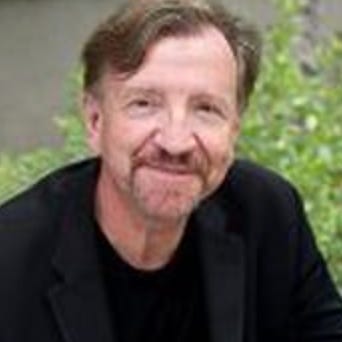
Me, around the time I was department Chair, shortly after an important surgery.
[1] After Clark Kerr’s reforms as president of the UC system, UC budgets were very large and the income from the California state was equivalent to that from the largest private university endowments, but that did not last, unfortunately.
[2] In a university like UC Berkeley, nearly all departments are in the top 3 or top 5 in the world, so the economics department is not more exceptional than other departments.
<https://gerardroland.substack.com/p/the-berkeley-years-part-xxii> <https://gerardroland.substack.com/>
Brad DeLong here: That is what being a department chair at UC Berkeley is like.
The most important thing I note from Gérard’s account is this:
As chair, he worked like a dog doing what was properly Dean Carla Hesse’s job, fundraising to try to boost Berkeley’s endowment so that we would not be at such a financial disadvantage in resources vis-à-vis our peer institutions.
He was remarkably and incredibly successful at this.
Dean Carla Hesse then responded to this success of his by financially injuring his family.
Carla Hesse’s claim that “Heddy would from then on only be paid half-time instead of full-time but that those half-time funds would be secure” was a more-or-less even trade was complete bullshit: at Berkeley, funding is never secure. Secure funding is not secure.
The Berkeley administration is in enormous debt to Gérard that it has taken few steps indeed to honor.
When I was chair of Berkeley’s PEIS major, I evolved my own theory of Berkeley’s senior administrators. My theory was this:
They spent the first three days of each month trying to think rationally and seriously about the future of the university and about resource allocation.
On day four, they would have to respond to a faculty retention case in response to an outside offer launched by another university with a much larger endowment.
They would then spend the rest of the month turning every piece of Berkeley they could put their hands on upside down and shaking it, in the hopes that money that could be used to respond to the retention case would somehow fall out.
Pieces of Berkeley that were functioning well (as PEIS then was and now is) were seen as easy targets for this effort. They were doing well, right? Surely they could afford to limp along with somewhat fewer resources? Couldn’t they?
Pieces of Berkeley that were functioning badly were immune: we have enough problems and cannot risk creating more! Perhaps we should ease their resource constraint?
On the principal that The Purpose of a System Is What It Does, TPOASIWID, this is not a good way to run a railroad, or a university. And yet somehow we continue to do very very well.