
As Cosma Shalizi Says, "The Singularity Is in Our Past": Saturday Twentieth Century Economic History Weblogging: HOISTED FROM THE ARCHIVES FROM 2013
From 2013-03-09: we keep waiting for a technological singularity, but Cosma Shalizi is right: it already happened, and we call it the long nineteenth century. That rupture already flipped work, necessity, and freedom in ways so profound that we can only hang on for the ride, and may well never see some change so profound happen so quickly.
Look at the leading edge of today’s rich urban societies and you see a world our pre‑industrial ancestors would not recognize: machines do the sweating, while hyperliterate humans teach, heal, entertain, and manage intricate symbolic systems of power and production. How did we get from “in the sweate of thy face” to this peculiar post‑industrial condition? 1776 to 1914 was the real singularity in human history, one that turned economic history from a slow background drift into history’s driving force. Yet the transformation remains incomplete, and its patterns will organize the twenty-first and twenty-second centuries.
I find myself following links back to my own work that have succumbed to linkrot—especially the shutdown of <http://typepad.com>. Whenever this happens, I think two things:
First, I should prioritize the big job of getting the whole kit and caboodle back to 1995 up on WordPress somewhere. This is a big job, and I would rather not start it until I have time to make sure that it runs as efficiently and effectively as it can run.
Second, I should throw the things I run across up on the SubStack, for if I am looking for them, maybe somebody else is looking for them too.
As Cosma Shalizi Says, “The Singularity Is in Our Past”: Saturday Twentieth Century Economic History Weblogging
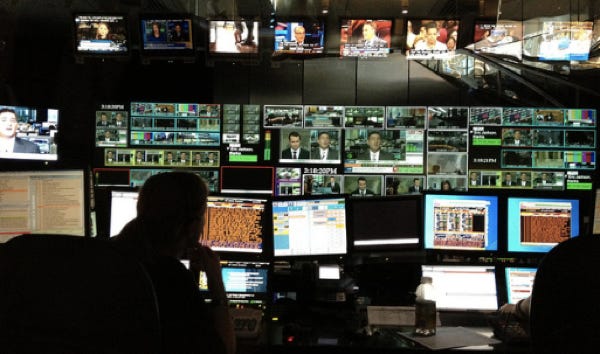
Look at the bleeding edge of urban North Atlantic or East Asian civilization, and you see a world fundamentally unlike any human past. Hunting, gathering, farming, herding, spinning and weaving, cleaning, digging, smelting metal and shaping wood, assembling structures--all of the “in the sweate of thy face shalt thou eate bread” things that typical humans have typically done since we became jumped-up monkeys on the East African veldt--are now the occupations of a small and dwindling proportion of humans. And where we do have farmers, herdsmen, manufacturing workers, construction workers, and miners, they are overwhelmingly controllers of machines and increasingly programmers of robots. They are no longer people who make or shape things--facture--with their hands--manu.
At the bleeding edge of the urban North Atlantic and East Asia today, few focus on making more of necessities. There are enough calories that it is not necessary that anybody need be hungry. There is nough shelter that it is not necessary that anybody need be wet. There is enough clothing that it is not necessary that anybody need be cold. And enough stuff to aid daily life that nobody need feel under the pressure of lack of something necessary. We are not in the realm of necessity.
What do modern people do? Increasingly, they push forward the corpus of technological and scientific knowledge. They educate each other. They doctor each other. They nurse each other. They care for the young and the old. They entertain each other. They provide other services for each other to take advantage of the benefits of specialization. And they engage in complicated symbolic interactions that have the emergent effect of distributing status and power and coordinating the seven-billion person division of labor of today’s economy. We have crossed a great divide between what we used to do in all previous human history and what we do now. Since we are not in the realm of necessity, we ought to be in the realm of freedom.
But although we have largely set these post-agrarian post-industrial patterns for the next stage of human history, the human world of this next stage is only half-made. The future is already here--it is just not evenly distributed. Of the 7.2 billion people alive in the world today, at least 25% billion still live lives that are hard to distinguish from the lives of our pre-industrial ancestors. Only 5% of today’s world population lives in countries where income per capita is greater than $40,000 per year; only 10% lives in countries where income per capita is greater than $20,000 per year.
The bulk of the world’s population is on the stairway to modernity. The patterns are set. The top of the stairway is visible--although it is not clear which top we shall reach: many possible tops are immanent in the patterns. Nevertheless, the climb will be hard. And that is what much of the history of the twenty-first and twenty-second centuries is likely to be about.
So how did this great transformation happen? And how did the way it happened shape who we are now and who we will be in the future?
The traditional tools, practices, patterns, and molds of history are not as much help in telling this story as one might hope. The history of how the world was greatly transformed is primarily economic and technological, and secondarily political and social. But historians are not used to placing the economic and technological in first place. In the study of any period back before 1800, there is no way that economic history can be seen as even one of the principal axes. Before 1800, most history at even the century-level--let alone the decade-level or the year-level--could not be economic history. History is change. And before 1800 economic factors changed only slowly. The structure and functioning of the economy at the end of any given century was pretty close to what it had been at the beginning.
The economy was then was much more the background against which the action of a play takes place than like a dynamic foreground character. Changes in humanity’s economy--how people made, distributed, and consumed the material necessities and conveniences of their lives--required long exposures to become visible. Economic history could be--indeed, had to be--a specialized “long duration” history. It required a scope of perhaps 500 years, if not more, to be properly placed in the foreground of any historical canvas. And even then the story told was of recurrent patterns and cycles rather than development and change.
But since 1750 or so things have been different. The pace of economic change has been so great as to shake the rest of history to its foundation. For perhaps the first time, the making and using the necessities and conveniences of daily life--and how production, distribution, and consumption changed--has been the driving force behind a single century’s history. Even in the most long-established of professions, the pattern and rhythm of work life today is so very different from that of our ancestors as to be almost unrecognizable. It is these changes in production and also in home life and consumption, and the reactions to them, that make up the center ring action of the history that has made us who we are.
This post-1750 history takes place in two stages. The first stage is the nineteenth century: the century of the British Industrial Revolution. Call it 1750-1870. It opens up the possibilities. The second stage is the twentieth century. Call it 1870-2010. It sets the patterns into which the human world is likely to grow in the future.
Shalizi, Cosma. 2010. “The Singularity in Our Past Light-Cone”. Bactra. November 28. <http://vserver1.cscs.lsa.umich.edu/~crshalizi/weblog/699.html>.
And I might as well put the short text of this up here as well:
Cosma Shalizi (2010): The Singularity in Our Past Light-Cone <http://vserver1.cscs.lsa.umich.edu/~crshalizi/weblog/699.html>:
“Attention conservation notice: Yet another semi-crank pet notion, nursed quietly for many years, now posted
in the absence of new thoughtsbecause reading The Half-Made World brought it back to mind.The Singularity has happened; we call it “the industrial revolution” or “the long nineteenth century”. It was over by the close of 1918.
Exponential yet basically unpredictable growth of technology, rendering long-term extrapolation impossible (even when attempted by geniuses)? Check.
Massive, profoundly dis-orienting transformation in the life of humanity, extending to our ecology, mentality and social organization? Check.
Annihilation of the age-old constraints of space and time? Check.
Embrace of the fusion of humanity and machines? Check.
Creation of vast, inhuman distributed systems of information-processing, communication and control, “the coldest of all cold monsters”? Check; we call them “the self-regulating market system” and “modern bureaucracies” (public or private), and they treat men and women, even those whose minds and bodies instantiate them, like straw dogs.
An implacable drive on the part of those networks to expand, to entrain more and more of the world within their own sphere? Check. (”Drive” is the best I can do; words like “agenda” or “purpose” are too anthropomorphic, and fail to acknowledge the radical novely and strangeness of these assemblages, which are not even intelligent, as we experience intelligence, yet ceaselessly calculating.)
Why, then, since the Singularity is so plainly, even intrusively, visible in our past, does science fiction persist in placing a pale mirage of it in our future? Perhaps: the owl of Minerva flies at dusk; and we are in the late afternoon, fitfully dreaming of the half-glimpsed events of the day, waiting for the stars to come out.
And cross-reference as well to the very keen-witted:
Kumar, Krishan. 1978. Prophecy & Progress:
The Sociology of Industrial & Post-industrial Society. London: Penguin. <https://www.google.com/books/edition/Prophecy_and_Progress/_ZUJAQAAIAAJ?hl=en>