
I Think AI-Forward Car Companies Like Rivian Are Going to Get Their Clocks Cleaned: <strike>READ</strike> LISTEN OF THE DAY
I cannot see the case as realistic. I cannot help but see Rivian/VW’s anti-android auto anti-apple carplay software walled-garden dreams as likely hallucinations. The absence of buttons, trying to charge through the nose for software walled gardens, and the $1500 or more of dark silicon Rivian/VW wants to deploy in your next EV.
Automakers dream of AI-first cabins; drivers are highly likely to still live in a phone-first world: you take your phone with you when you get in the car. You cannot take your car with you when you get out of the car and enter a building.
But if it does work—if every EV does wind up shipping with a powerful NPU accelerator that car owners can harvest whenever the car is idle and plugged in—then AI-cloud datacenter business models start looking like even more of a scam.
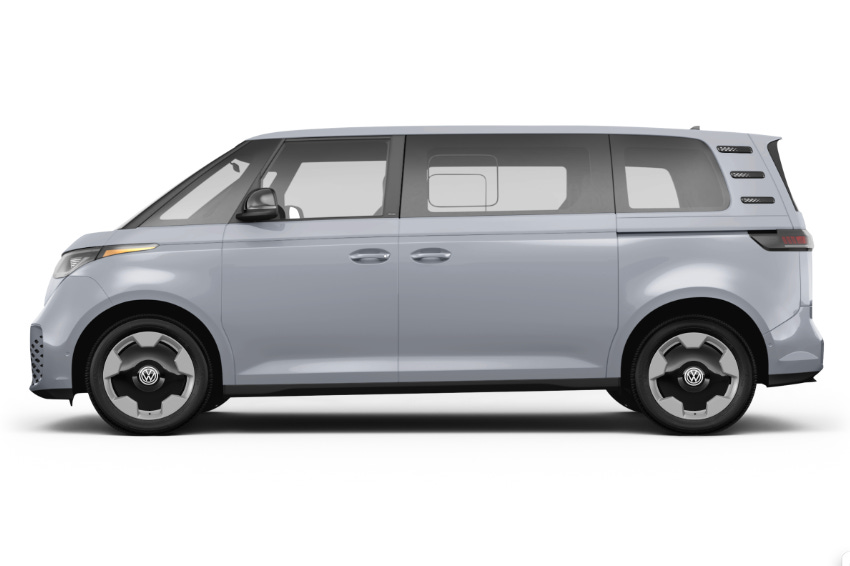
Listening this AM to Nilay Patel interview Rivian/VW software honcho Wassym Bensaid:
Nilay Patel: Rivian’s software chief thinks you don’t need CarPlay or buttons: <https://www.theverge.com/podcast/929940/rivian-wassym-bensaid-software-volkswagen-carplay-assistant-ai>: ‘Wassym Bensaid on why AI-powered voice control should be the future interface of car software…
This is, for me, a big reach. I can see full self-driving. I can see cruise control, lane-keeping, following distance, directions, and “where is the button that…?” The advantage of buttons and depress and gearshifts that shift and other biofeedback interfaces are immense: Tesla killed Mitch McConnell’s sister-in-law, after all, by not having a real gearshift and not having an obvious non-electronic way to open doors underwater in the dark. I cannot see much in between.
And yet Wassym makes and seems to believe in his case. There are none of the winks-and-nods that would shift what he says into “I’m being a good corporate soldier” here. He seems to believe his case, that is simultaneously a business case and a technical software case.
However, it rests on a single very narrow foundation: the idea that:
Google will let Rivian use its natural-language voice assistant, to control the phone, while
Rivian/VW will not let Google use its natural-language voice assistant to control the car for “safety” reasons.
This is, I think, not in evidence.
There is also Wassym’s assumption that the computer will be a bigger and a better computer than your phone. Yet you can bring your phone with you: there is friction involved in switching a task-in-progress from the phone to the car when you get in the car. By contrast, there is no option to continue an in-progress task on the car when you exit the car: you cannot take it with you. Switching from the car back to the phone when you exit is a necessity.
So why should people pay for a better-than-phone computer in the car rather than just purchase a car that has complete Apple CarPlay or Google Android Auto integration? That is $1500 down the drain, is it not? The only counter is “deep in-car integration”, whatever that means.
Rivian Assistant is presented by Wassym as a deeply integrated, AI-powered voice agent that serves as the connective tissue of this new architecture, controlling most vehicle functions, orchestrating apps and services via an “agentic” framework, and increasingly run on powerful local (edge) compute, and that this approach justifies Rivian’s refusal to support Apple CarPlay or Android Auto. This seems to me to assume that Apple and Google are potted plants that will not react, and that none of Rivian/VW’s competitors will be willing to hand full stack control over to Apple and Google.
RV Tech is now a 1500-person joint venture building an AI-defined core software stack for all VW and Rivian vehicles. The upcoming R2 platform will have 5G connectivity and up to 200 “sparse TOPS” of dedicated AI compute on the car’s local hardware. Compare that to perhaps 500 for the M4MaxMacStudio, and to 150 for the iPhone17 (depending on the conversion between “dense” and “sparse” TOPS).
If it does work, then there will be a lot of dark silicon being deployed by the existence of in-car better-than-phone computers that are idle an average of at least 22 hours a day and potentially plugged in for at least 18 of them.
That has powerful implications for the prospects of ever making significant money by selling data-center services for more-than-marginal-cost.
How does the promise of “deep integration” work? How does it overcome the asymmetrical frictional switching costs of getting in and out of the car?