"Contango", "Backwardation", & the Current Freaking-Out of the Oil Market
A quick primer on obscure bits of long-ago City-of-London slang, war, scarcity, the global intertemporal price system, futures-market curves, interest rates, and “convenience yields”…
Oil traders say Brent is “deep in backwardation,” and everyone nods and pretends they know what that means.
Backwardation and contango sound like Hogwarts houses, don’t they?
Actually, they are how finance people describe the shape of commodity futures prices over time. Here I try to unpack both the language and the economics how they sit on top of the interest‑rate‑and‑growth machinery of the economy. This, for those who actually want to know, is a brief walk-through for what “backwardation” and “contango” really are.
“Contango” began life as a jokey 19th‑century fee on the London Stock Exchange; now it’s half of the core vocabulary for thinking about commodity futures. “Backwardation” was coined independently from the idea that spot and futures price relationships had become “backward”.
In a tranquil, growing economy with normal storage, you’d expect mild contango: futures above spot, reflecting interest and carry costs. Today’s oil market looks very different. Brent’s prompt spread has blown out because the “convenience yield” on physical barrels right now—amid war and damaged infrastructure—has exploded. Today’s oil curve is screaming “shortage now, maybe relief later”the intertemporal price system and debt interest textbook forces are still there, but layered under a very specific, very acute scarcity in one crucial input.
This morning brings:
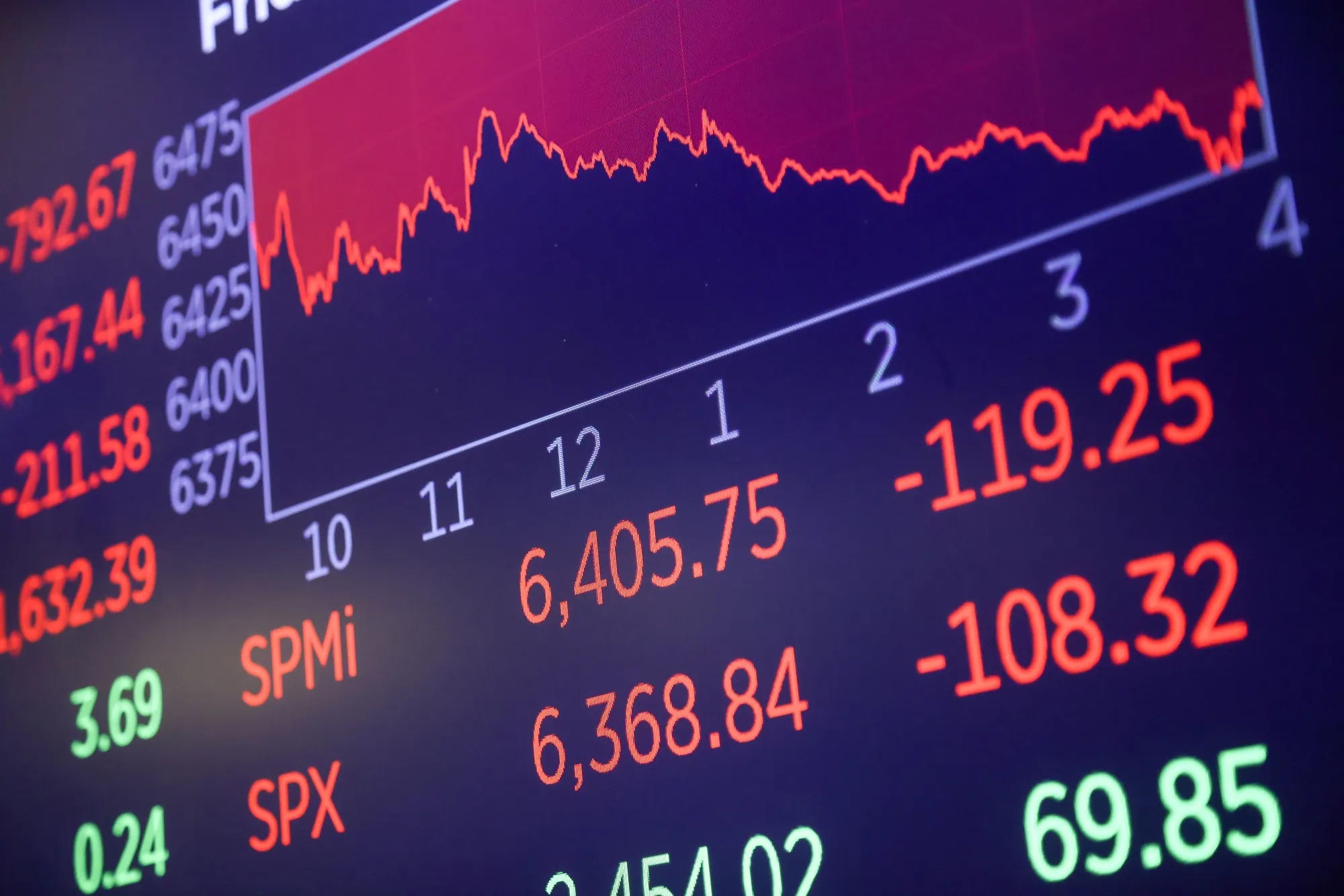
Phil Serafino & Lynn Thomasson: Oil Shock Is Adding Stress to the Global Economy <https://www.bloomberg.com/news/newsletters/2026-04-06/oil-shock-is-adding-stress-to-the-global-economy>: ‘Energy market stress has reached a fever pitch…. As the war grinds on, there are signs of acute concern about near-term supply. Brent’s prompt spread — the difference between its two nearest contracts — ballooned above $10 a barrel in backwardation, a bullish pattern. That’s the widest since the conflict began, and tops peaks in 2022 after Russia invaded Ukraine…
Photographer: Michael Nagle/Bloomberg
and also requests in email for people wanting to know what things like “backwardation” mean. So: an economist’s primer to that and such:
First: “backwardation”. It is a commodity-trading term that always goes with “contango”. They are local price-curve-over-time phenomena. They are driven by storage, risk, convenience, and the interest rate. They are layered on top of the deeper “interest‑rate + growth” structure of intertemporal prices.
Think of three stacked layers:
The pure intertemporal price system (real interest rate + growth).
Debt and discounting (how we trade claims on consumption across time).
Commodity futures (backwardation/contango) sitting on top, with storage and “convenience yield.”
1. The baseline: growth, utility, & the slope of real prices
In a representative‑agent, growing economy, we find that the price system’s workings over time reflect:
With growth in consumption per capita:
Thus marginal utility in the future:
will be lower than it is today. That pushes you toward a positive real interest rate r_t > 0. The shadow price of a dated unit of consumption tends to fall over time in a growing economy. That is the downward slope of the intertemporal price system because:
You’re richer tomorrow than today, so an extra unit of “stuff” tomorrow is less valuable at the margin.
The more productive future economy can make that stuff with fewer resources, so the resource cost of future output is lower.
And debt interest is the market expression of that underlying resource-allocation shadow-price fact: the real interest rate is the relative price of today’s consumption vs. tomorrow’s consumption. In a nice, frictionless world, it would be the case:
Real interest rate ≈ time preference + expected consumption growth effects − risk terms.
So the “default” is exactly what you say: the future real marginal price of generic consumption should be lower.
But!
2. Where commodity futures come from: carry & convenience
Now layer on a specific commodity and organized futures trading. Abstracting away risk for a moment, the standard no‑arbitrage relation for a storable commodity is:
where:
F = futures price for delivery at time T
S = spot price today
r = (real) interest rate
c = storage and other carrying costs (insurance, spoilage, warehouse fees, etc.)
y = “convenience yield”: the non‑pecuniary benefit or option value of holding the physical good right now
If you strip out c and y, you get your intertemporal story predicts: with positive r, the futures curve slopes up; a unit of commodity later is worth less in present value, so the nominal futures price has to be higher to be equivalent.
“Backwardation” and “contango” are just shorthand for which side of this balance dominates:
Contango: r + c > y ⇒ F > S ⇒ upward‑sloping futures curve. The “interest + storage” costs exceed the value of having the stuff now. This is the “normal carry” case compatible with your generic growing‑economy intuition.
Backwardation: y > r + c ⇒ F < S ⇒ downward‑sloping futures curve. The immediate benefit of owning the physical commodity (“I really need barrels in my tanks now”) is so large that it overwhelms interest and storage. The prompt stuff is priced at a premium relative to future delivery.
So: the sign of backwardation/contango is about the net of convenience yield and carry costs, not about the fundamental growth‑driven slope of the utility‑discounted consumption path. The latter shows up as r in the formula, but it’s only one term.
With competitive storage, the “normal” case is a modest upward‑sloping curve (mild contango) reflecting storage + financing + insurance costs minus any “convenience yield” from having inventory on hand. Strong backwardation is a sign that near‑term scarcity and convenience yield have blown through that textbook pattern.
3. Where do these terms come from?
These terms are jargon from the futures/derivatives markets, imported into everyday commodities and finance talk. Historically, merchants and early commodity traders needed language for how prices for delivery “now” compared with prices for delivery in the future.
Out of that practice you get these two labels for the term structure of prices:
“Contango” is older. It shows up in 19th‑century London stock and commodity markets as the fee for carrying a position forward to the next settlement. Over time, the word slid from describing the fee to describing the situation where future-delivery prices are higher than spot.
“Backwardation” seems to have been coined later as a kind of mirror-image term: if “contango” is the condition in which the future stands at a premium to spot, “backwardation” is when the future is “backward” (below) today’s price. Earlier uses in the 19th century referred to fees paid when you failed to deliver stock on time; as with contango, the meaning migrated to describe the whole price configuration rather than just the penalty.
By the mid‑20th century, these had become standard in academic and practitioner finance to label the two canonical shapes of a futures curve.
Nowadays, when Bloomberg says Brent is “deep in backwardation,” they’re just using that inherited City-of-London slang for “near-dated contracts priced well above later ones.”
Where did the word “contango” come from?
It is clear that it is a word for a fee to slide a transaction to the next settlement day. It is clear it has nothing to do with the “tango” dance. We know what the commodities brokers were naming: the fee for continuing your position. The obvious transparent English name—continuation fee—coexisted with “contango”. We know that at some point “contango day” displaces “continuation day”. We suspect that it is playful City-of-London slang. And we think that slang just stuck. Arbitrary professional slang whose form was influenced by existing words like “continue/continuation/contingent”.
There are some tempting but undemonstrated Latin/Spanish resonances. Maybe:
Dog Latin via contingo: as one Stack Exchange answer notes, Latin contingō is con- + tangō (“touch together, happen to”), and there is scattered early-modern “contango” as bogus Latin. It’s quite possible a classically trained broker enjoyed the pun and it fed into the slang form . But we don’t have a clean chain from that to the LSE usage; it’s an attractive coincidence, not a documented derivation.
Spanish contengo: Etymonline mentions contengo (“I contain, restrain, check”) as another maybe‑source. Again: plausible in a hand‑wavy semantic sense (restraining settlement, checking payment), but there is no textual bridge from Iberia to Capel Court traders.
Cockney/Scouse slang: some commentators point out that the earliest OED cite is Liverpool rather than London and suggest it might be from local dialect or Cockney traders’ speech . Nobody has actually produced a dialect root; this is effectively “perhaps someone around there made it up.”
Maybe not?
Then comes semantic drift from fee to curve:
19th c.: contango = the continuation fee itself.
Late 19th / early 20th c.: by metonymy, it also comes to denote the carried‑forward position and then the situation in which settlement is carried and the forward price stands at a premium.
20th c.: after the old LSE account‑day system dies out, the fee sense becomes obsolete, and “contango” survives solely as the state of the futures curve where forward > spot.
Note that that is orthogonal to the much more transparent creation of “backwardation”: if the future price is “backward” (below spot), you get backwardation. “Contango” just got grandfathered in from the fee jargon. It never had to earn its semantic keep.
4. How debt interest fits in
Debt markets are pricing claims on broad consumption baskets, not barrels of Brent in Cushing or Rotterdam. When you buy a bond, you’re contracting over the general real interest rate, the intertemporal price of “consumption now vs. later”), driven by growth expectations, time preference, and risk; and credit risk, term premia, etc. That debt interest rate then feeds into the cost of carry in the commodity arbitrage condition. If real interest rates are higher, it’s more expensive to hold inventory, so holding everything else constant you’d expect more contango (you need a higher futures price to make storage worthwhile). But the futures curve can still be in backwardation when convenience yield is very high (tight inventories, geopolitical risk, fear of physical shortage), while it is in contango when inventories are ample and the marginal value of “having it in hand” is low. Even deep backwardation only says that for this particular storable good, the short‑run scarcity premium dwarfs the standard carry terms implied by interest rates and storage.
So:
In a tranquil, high‑growth, low‑risk world with well‑functioning storage, you’d indeed expect mild contango to be the norm: F > S reflecting r + c with modest convenience yield. That’s the downward‑sloping intertemporal price system.
But when the world goes pear‑shaped for a specific supply chain—as with Middle East oil capacity under attack—the convenience yield on prompt barrels explodes. The price system then says: “The marginal utility of oil right now is extremely high compared to oil next year,” even though the marginal utility of generic future consumption remains lower than today.
Backwardation is a localized violation of the “future is cheaper” rule, for a specific slice of the consumption bundle, driven by a transitory but intense scarcity shock.
If reading this gets you Value Above Replacement, then become a free subscriber to this newsletter. And forward it! And if your VAR from this newsletter is in the three digits or more each year, please become a paid subscriber! I am trying to make you readers—and myself—smarter. Please tell me if I succeed, or how I fail…