
THING YOU OUGHT TO KNOW: Historian Patrick Wyman Does Podcasts
& Patrick Wyman’s relatively new “Past Lives” podcast is excellent: : <https://patrickwyman.substack.com/p/new-history-podcast-past-lives>…
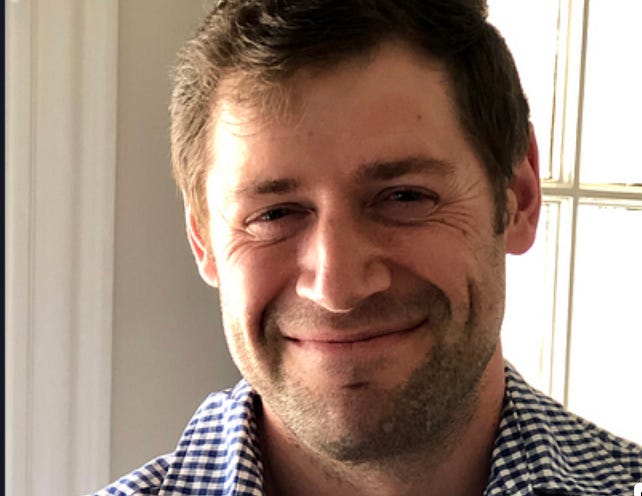
Patrick Wyman: <https://bsky.app/profile/patrickwyman.bsky.social/post/3mhw6odcejs23>: ‘New season of Past Lives starts now! Introducing Bodily Experiences - every episode focuses on the life of a person we know through their remains, like skeletons and mummies. Thanks to new archaeological tools, we can understand past people in ways never before possible <https://patrickwyman.substack.com/p/new-history-podcast-past-lives>.
People I'm covering on this new season of Past Lives:
-Anzick-1, the oldest human remains found in the Americas
-The Ancient One/Kennewick Man (N. America, 6500 BC)
-The Shaman of Bad Durrenberg (Europe, 7000 BC)
-Otzi the Iceman (Europe, 3300 BC)
-The Princess of Xiaohe (Xinjiang, 1800 BC)
-Gebelein Man (Egypt, 3300 BC)
-The Amarna Laborers (Egypt, 1330 BC)
-Fu Hao (Shang Dynasty, China, 1200 BC)
-Tollund Man (Europe, bog body, 400 BC)
-Pazyryk Ice Maiden (Scythian tattooed mummy, 400 BC)
-Ephesus Gladiator (Roman, c. 200 AD)
And many, many more!…

Patrick Wyman has the prose-, the speaking-, the patience-, and the narrative imagination-skills to make what is important about history intelligible and compelling. In a media ecosystem optimized for outrage and velocity, he has, perversely and admirably, instead optimized instead for explanation and understanding.
Wyman is a trained historian who decided that the thing he best at—reconstructing the texture of lived experience from fragmentary sources, and then embedding that texture in the big, slow-moving structures of power, production, and belief—might actually be useful for making sense of the twenty‑first century. His Substack, “Perspectives: Past, Present, & Future” at <https://braddelong.substack.com/publish/post/192189965>, undersells how ambitious the project really is. The through‑line is that you cannot understand who we are now without understanding the worlds that made us, and you cannot understand those worlds without following the flows of power and resources, and you cannot follow those flows without caring about people who never made it into the standard high‑political narrative at all.
That sensibility was already on display in his earlier work—on Rome, on late medieval war and state formation, on the strange, violent adolescence of European capitalism. But it coalesces in this podcast series. Wyman is very good at asking, in effect: what did this feel like for the people who were not in the council chamber, not on the throne, not in the ledgers as partners but in the ledgers as costs?
That was part of what made his book The Verge such a powerful piece of writing: individual lives as vehicles through which historical structure becomes visible as we watch people navigate a world in which the “big” changes—the rise of long‑distance commerce, the consolidation of states, the spread of new technologies and ideas—are not slogans but pressures and opportunities that smell of mud, gunpowder, and printer’s ink.
It helps a lot that he writes and speaks beautifully. The prose and voice are clean, vivid, and unpretentious, with an ear for the telling detail and the sharp phrase. He can toggle, in a single piece, from the granular—how a particular family’s fortunes rose and fell with the price of grain—to the synoptic—how the integration of Atlantic and Baltic trade circuits reweighted the hierarchy of European regions. Wyman is building a body of work that models how serious history can function in a democratic conversation. He is not dumbing things down; he is lifting readers up, on the assumption that they are capable of following arguments about structure and contingency, about path dependence and power. At a time when much commentary oscillates between shallow presentism and comforting myth, that is an enormous service.
That is what good historical writing (and speaking) ought to do. He does it, consistently.
References (by AI):
WYMAN, PATRICK. 2026. Post on Bluesky: “New season of Past Lives …” BlueSky. March 25. <https://bsky.app/profile/patrickwyman.bsky.social/post/3mhw6odcejs23>.
WYMAN, PATRICK. 2026. Lost Worlds: How Humans Tried, Failed, Succeeded, & Built Our World—A History of Civilization Through Trial & Error, Ice Age to Bronze Age. New York: HarperCollins. <https://books.google.com/books/about/Lost_Worlds.html?id=–Y80AEACAAJ>.
WYMAN, PATRICK. 2025. “New History Podcast: Past Lives.” Perspectives: Past, Present, & Future. November 17. <https://patrickwyman.substack.com/p/new-history-podcast-past-lives>.
WYMAN, PATRICK. 2023. “Welcome (Back) to Perspectives.” Perspectives: Past, Present, & Future, December 7. <[patrickwyman.substack.com/p/welcome...](https://patrickwyman.substack.com/p/welcome-back-to-perspectives>.)
WYMAN, PATRICK. 2021. The Verge: Reformation, Renaissance, & Forty Years that Shook the World. New York: Twelve. <https://www.hachettebookgroup.com/titles/patrick-wyman/the-verge/9781538701171/>.
WYMAN, PATRICK. 2017–2026. Tides of History. <https://podcasts.apple.com/us/podcast/tides-of-history/id1257202425>.