
A Snapshot from the Fall of the Roman Republic: Cicero Wrote as Caesar Crossed the Rubicon
Two Months to the collapse of the anti-Caesarean Republican Pompeius-Senatorial Optimates coalition in Italy…
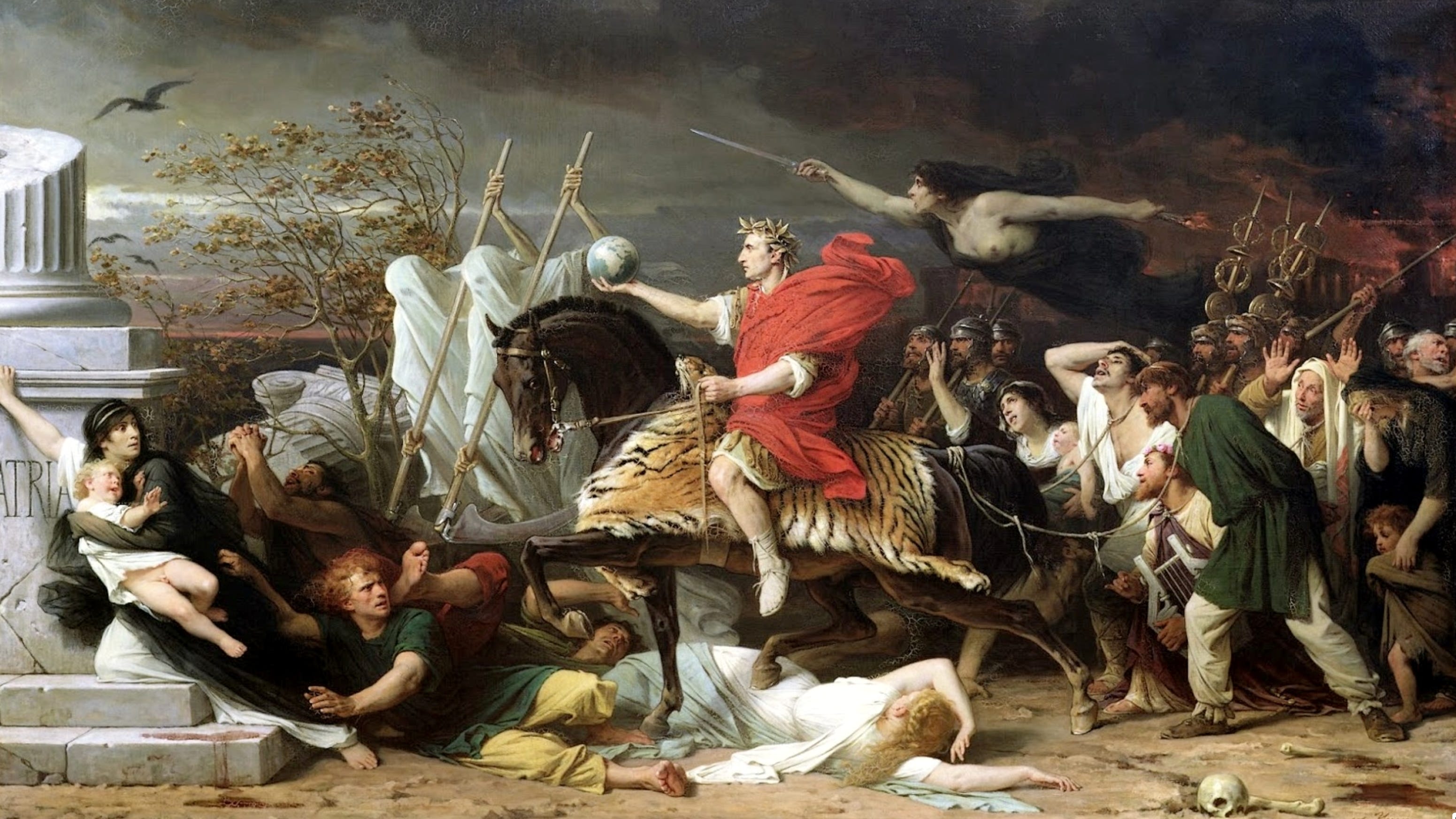
A small river, a large signal: “the die is cast” backed by paid-for grain, unsacked cities, and unburned warehouses. In brittle institutions, the cause that appears to be for a functioning state wins the coördination and recruitment game. Caesar didn’t conquer Italy with slaughter in the winter-spring of -49. But how did he do it?
Caesar would brook no superior, and Pompeius would brook no rival, and the senatorial optimates faction were a pack of chaos monkeys. Marcus Tullius Cicero to his ex-slave and then-current secretary, Marcus Tullius Tiro, at Patrae, on January 12, -49: <https://theilian.livejournal.com/7270.html>:
CICERO and his son, Terentia, Tullia, Quintus and his son, send warm greetings to Tiro.
Though I miss your ever-ready help at every turn yet it is not for my sake so much as for yours that I grieve at your illness. But now that the violence of your disease has abated so far as to become a quartan fever—for so Curius writes me word—I hope that with care you will soon become stronger. Only be sure—as becomes a man of your good sense—to think of nothing for the present except how to get well in the best possible way. I know how your regret at being absent worries you, but all difficulties will disappear, if you get well. I would not have you hurry, for fear of your suffering from sea-sickness in your weak state, and finding a winter voyage dangerous.
I arrived at the city walls on the 4th of January. Nothing could be more complimentary than the procession that came out to meet me; but I found things in a blaze of civil discord, or rather civil war. I desired to find a cure for this, and, as I think, could have done so; but I was hindered by the passions of particular persons, for on both sides there are those who desire to fight.
The long and short of it is that Caesar himself—once our friend—has sent the senate a menacing and offensive despatch, and is so insolent as to retain his army and province in spite of the senate, and my old friend Curio is backing him up. Farthermore, our friend Antonius and Q. Cassius, having been expelled from the house, though without any violence, left town with Curio to join Caesar, directly the senate had passed the decree ordering “consuls, praetors, tribunes, and us proconsuls to see that the Republic received no damage”. Never has the state been in greater danger: never have disloyal citizens had a better-prepared leader.
On the whole, however, preparations are being pushed on with very great activity on our side also. This is being done by the influence and energy of our friend Pompey, who now, when it is too late, begins to fear Caesar.
In spite of these exciting incidents, a full meeting of the senate clamoured for a triumph being granted me: but the consul Lentulus, in order to enhance his service to me, said that as soon as he had taken the measures necessary for the public safety, he would bring forward a motion on the subject.
I do nothing in a spirit of selfish ambition, and consequently my influence is all the greater. Italy has been marked out into districts, shewing for what part each of us is to be responsible. I have taken Capua.
That is all I wanted to tell you. Again and again I urge you to take care of your health, and to write to me as often as you have anyone to whom to give a letter.
Good-bye, good-bye.
The most interesting things about this letter are three:
That the political state of Rome in early January -49 came as such a surprise to Cicero.
That he believed the joint Pompeius-senatorial optimates alliance was in good shape with “very great activity…being done by the influence and energy of our friend Pompey…”
Cicero’s statement that he “desired to find a cure… and… could have done so; but I was hindered by… passions… on both sides… [of] those who desire to fight”.
Cicero was always very full of himself, and greatly overestimated his own power, influence, and reputation. But, still, what did he mean by (3)? And why did he have so much confidence in (2)? And why did (1) come as a surprise?
It still puzzles me. But here are my guesses as to the likely answers to (some of) these questions:
The course of events from Caesar’s crossing of the Rubicon on January 11 to Pompeius’s flight to Greece on March 13 or so is one of the most amazing in history. Start with the fact pattern. During an early-January night Gaius Julius Caesar stepped across a small, cold, bureaucratically important stream called the Rubicon. By mid-March his rival, sometime ally, and former son-in-law Gnaeus Pompeius Magnus fled to Greece, taking with whom only two legions or so. In between tota Italia had done something extraordinary. Not extraordinary as in “epic speech and clashing shields,” but extraordinary as in “the revealed preference curve moved sharply and quickly.” All the people in Italy with both the means and inclination to bear arms either decided to bear them for Caesar—or else decided not to bear them at all. The sword supply tightened for Pompey; the sword demand shifted to Caesar.
Caesar was charismatic, yes. But why was his charisma effective?