
Against Hankins: You Can't Use Moral Relativism to Claim a Warrior Is "Great" in Any Sense Connoting Admirability
I woke up in a bad mood this morning. Thus I want to circle around again—like a dog to its vomit—and set out the two things that really piss me off about James Hankins’s excerpt from his The Golden Thread that he chose to publish in First Things: one that is full-blown fascist, and the other that is profoundly anti-Christian:
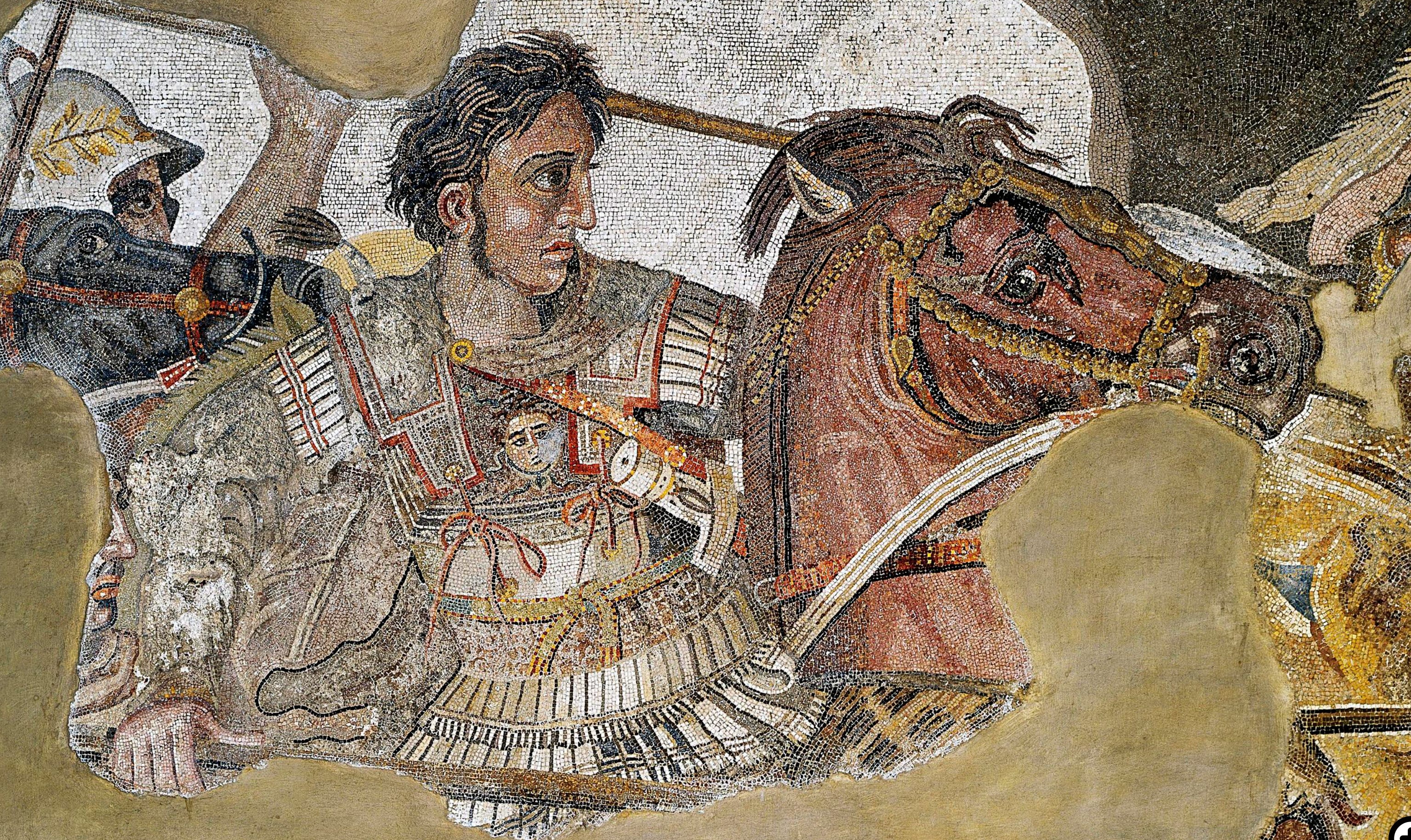
The full-blown fascist—not neofascist, merely—is this:
James Hankins: The Greatness of Alexander <https://firstthings.com/the-greatness-of-alexander/>: ‘Alexander’s ancient biographers seem unconcerned with… [his] atrocities…. It hardly excuses Alexander that such actions were normal practices in ancient warfare, and that execution and enslavement of defeated enemies was permitted under some ancient laws. However excused, such actions were surely not those of a philosopher-king.
We are shocked by these things, and by the failure of the ancients to condemn them, forgetting that our grandfathers saw no crime in the fire-bombing of German cities from the air or the nuclear incineration of two Japanese cities filled with innocent civilians….
It can be puzzling that the moral assessments of ancients and moderns differ so much from each other. We are inclined to think of these differences as stemming from the moral blindness of the ancients. Such condescension towards the past is an odious modern habit of mind…
World War II was a just war fought by the allies in ways that were—sometimes—unjust. It is simply a lie to claim that “our grandfathers saw no crime in the fire-bombing of German cities from the air” or that “our grandfathers saw no crime in the… nuclear incineration of two Japanese cities filled with innocent civilians”. There were great efforts made to grapple with the moral dilemmas of how to fight World War II to minimize the total amount of atrocity. And there was great concern over what we were doing, inside and outside the military. We did not ignore then, and we do not forget now.
More important, the only purpose of “forgetting” in Hankins’s passage here is to slide into full-blown moral relativism: because the West did not always live up to its high ideals about how to fight a just war justly, we have no standing to judge Aleksander for fighting unjust wars systematically unjustly—and that it is an “odious modern habit of mind” if we attempt to do so.
Hankins has now wedged himself into the fully fascist position that large-scale war-crimes are just hunky-dory. And that really does piss me off.
The profoundly anti-Christian one is this:
James Hankins: The Greatness of Alexander <https://firstthings.com/the-greatness-of-alexander/>: ‘If we fail to see the greatness of a man like Alexander, perhaps the reason is that we ourselves are too petty, too stunted in our outlook to appreciate it. As the Chinese poet Han Yu wrote, “A man living at the bottom of a well will think the sky is small.” We can’t accept greatness in part because we find it difficult to take ancient religion seriously; we moderns overlook the divine element in human nature, and the ability of the divine to transform us. For us, Alexander’s wish to be recognized as a god can only be evidence of insanity or, at best, a cynical ploy to win support among superstitious men. The ancients excused Alexander’s pretensions to superhuman status on the grounds that he did in fact have a great soul; his opinion of himself was justified. It was not hubris, because the gods did not punish but rewarded him with unbroken success. The ancients saw what we fail to see, or what we prefer not to see: that human beings can, exceptionally, achieve greatness, and this can only come through divine help…
Let’s set out the argument:
We are too petty and stunted to understand Aleksander’s greatness
Because we overlook what ancient religion knew:
That the divine can transform us
And make us great through divine help
Yes, Hankins claims that divine favor rested upon Alexander. Yes, Hankins claims that the favor of God Almighty, the Α & Ω, The One Who Is, rested upon him. For “[when] human beings… exceptionally, achieve greatness… this can only come through divine help”. And “the ancients saw [this but]… we fail to see, or… prefer not to see” it.
Now people are situational. I am sure James Hankins is a good guy in the Senior Common Room. I would love to learn from him about Francesco Petrarcha, Leonardo Bruni, and Marcello Ficino.
But this public presentation of himself that he has taken on—no thanks. Yuck!
References:
Hankins, James. 2023. “The Greatness of Alexander”. First Things. May 12. <https://firstthings.com/the-greatness-of-alexander/>.